
9.7· 18 reviews
Maragogi Natural Pools Boat Tour
Do you want to discover the beautiful natural treasure that is the Alagoas state? Then don't miss this boat tour around the natural pools in Maragogi.
2 h 30 min
from US$ 26
Maragogi deserves 3 to 4 days: enough for the trip to the Galés, the main beaches along the waterfront and time to rest. The best window runs from October to December, with December the driest month (37 mm over 9 days) and highs of 30 to 31 °C; from April to July it rains more, with 323 mm over 24 days in June.
Maragogi is the heart of what is called the Brazilian Caribbean: a stretch of the northern Alagoas coast where the sea is turquoise blue, shallow and very warm, protected by a coral barrier. The village, a former fishing colony, grew up around a natural spectacle: the Galés, natural pools that form over the reefs about 6 km off the coast, reached by catamaran at low tide. It is a postcard-perfect beach destination, without the crowds of the big capitals.
The climate is warm all year, with highs between 28 and 32 °C and a sea that is always at bathing temperature. Rain is concentrated in fall and winter, from April to July, with May and June the wettest; spring and summer, from September to March, are dry and sunny, the best window for trips to the Galés, when the sea is calmer and the water clearer. Low tide, not the season, is what defines the trip.
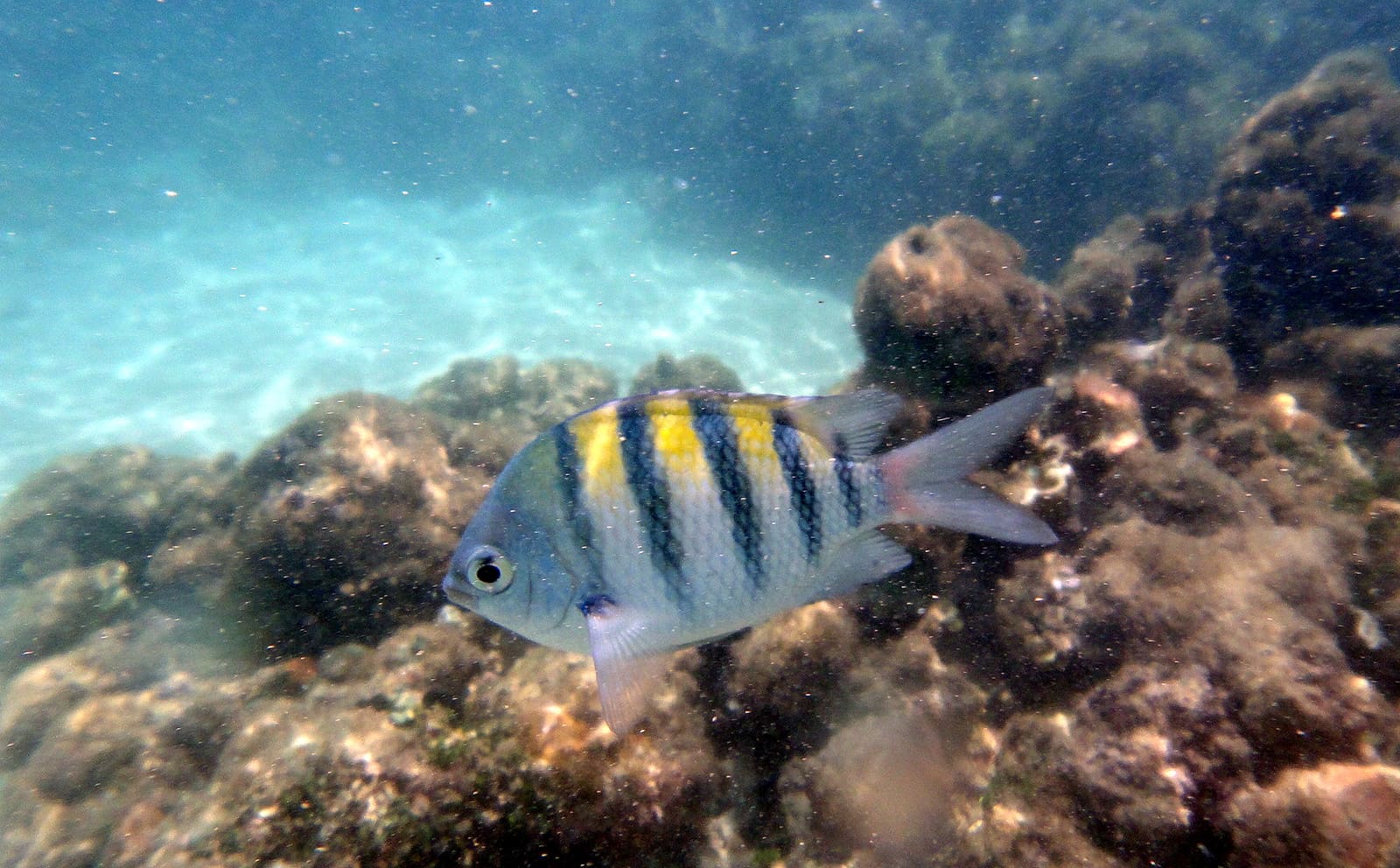
Everything in Maragogi revolves around the natural pools. The catamaran trip to the Galés is the must-do outing: snorkeling among colorful fish over the corals. On land, a string of coconut-grove beaches (Antunes, São Bento, Barra Grande, Burgalhau) alternates calm sea, sandbanks and beachfront stands. The region is part of the Costa dos Corais Environmental Protection Area, the largest marine protected area in the country. It is a destination for slowing down, with your feet in the white sand and the blue water.
Updated on October 19, 2026
Natural pools of turquoise water formed by reefs about 6 km off the coast, accessible at low tide for snorkeling. You get there by catamaran or motorboat from the waterfront, and it is the city's main trip.
A beach of pale sand and coconut palms, with calm turquoise-blue sea and beachfront stands.
A quiet beach, with its own natural pools and a good choice of pousadas (small inns).
At low tide a sandbank emerges and stretches out to sea, forming a natural path over the water.
A calmer beach, with good infrastructure and beachfront restaurants.
A fishing village known for the tradition of bolo de goma (a tapioca cake) and for its welcoming atmosphere.
The largest marine protected area in Brazil, home to the reefs and natural pools of the region.
Brazil is in the Southern Hemisphere, so the seasons are reversed compared with Europe and North America: summer runs from December to March and winter from June to August. In Maragogi the heat is constant: summer brings highs of 31 to 32 °C between December and March, and winter is mild; from June to August, the coolest months, the average high is 28 °C and the average low is 20 °C. The reference climate is that of the Maceió station, the nearest one, since Maragogi has none of its own.
What changes is the rain. December is the driest month, with 37 mm over 9 days, followed by November (45 mm over 6 days) and October (70 mm over 10 days). June is the wettest, with 323 mm over 24 days, followed by May (295 mm over 22 days) and July (271 mm over 23 days).
For the Galés, the best window runs from October to December, and from September to March the weather is drier and the sea is usually calmer. From April to July it rains more, peaking in May and June. Even so, what decides the trip is low tide: the catamaran leaves according to the day's tide table.
| Month | High | Low | Rain | Rainy days | Rating |
|---|---|---|---|---|---|
| January | 31 °C | 21 °C | 91 mm | 10 | Fair |
| February | 31 °C | 22 °C | 80 mm | 11 | Fair |
| March | 32 °C | 22 °C | 101 mm | 17 | Not recommended |
| April | 31 °C | 22 °C | 194 mm | 19 | Fair |
| May | 30 °C | 21 °C | 295 mm | 22 | Fair |
| June | 28 °C | 20 °C | 323 mm | 24 | Fair |
| July | 28 °C | 20 °C | 271 mm | 23 | Fair |
| August | 28 °C | 20 °C | 192 mm | 19 | Fair |
| September | 29 °C | 20 °C | 109 mm | 15 | Fair |
| October | 30 °C | 20 °C | 70 mm | 10 | Fair |
| November | 31 °C | 21 °C | 45 mm | 6 | Good |
| December | 31 °C | 21 °C | 37 mm | 9 | Good |
Monthly averages for 1991-2020 from INMET (Brazil's National Institute of Meteorology). The rating combines rainfall, temperature and humidity.
In summer (December to February), Maragogi has highs of around 31 °C (88 °F) and lows of 21 °C (70 °F), and it is the driest time of year, with about 69 mm of rain a month. The days are hot and call for beach time and shade.
In fall (March to May), Maragogi has highs of around 31 °C (88 °F) and lows of 22 °C (72 °F), and it is the wetter season, with about 197 mm of rain spread over about 19 days a month. The days are hot and call for beach time and shade.
In winter (June to August), Maragogi has highs of around 28 °C (82 °F) and lows of 20 °C (68 °F), and it is the wetter season, with about 262 mm of rain spread over about 22 days a month. The days are hot and call for beach time and shade.
In spring (September to November), Maragogi has highs of around 30 °C (86 °F) and lows of 20 °C (68 °F), and it is the wetter season, with about 75 mm of rain spread over about 10 days a month. The days are hot and call for beach time and shade.
Weather, crowds, prices and what is happening at the destination in each period. Tap a month to open its full page; the colored dot shows how good the time is for a visit.
New Year's Eve on the beaches and the waterfront, the peak of the summer high season.
Recurring annual events: exact dates change every year, so confirm them before you plan your trip.
The nearest airport is Zumbi dos Palmares International Airport (MCZ), in Maceió, about 125 km away. The alternative is Recife/Guararapes (Gilberto Freyre) International Airport, in Recife, about 130 km away. From both you reach the village by road transfer. Routes and airlines change often; the safest approach is to check them when planning your trip.
Along the coast, Maragogi is 125 km from Maceió (about 3 hours) and 130 km from Recife (about 3 hours).
The central village is walkable, but the beaches are spread along the waterfront: from Barra Grande to São Bento. It is best to choose lodging near the beach that interests you most and to allow for the transfer to the trip's departure point; many trips include a transfer. A car gives you the freedom to explore and to extend your trip along the coast.
Rates change with the dates: confirm the price on Booking.com.
From September to March it is drier and sunnier, with the sea calmer and clearer, the best time for the Galés. From April to July it rains more, especially in May and June. The heat is constant all year.
The Galés are natural pools over the reefs, about 6 km off the coast, accessible only at low tide. The trip leaves by catamaran from the waterfront, at times that follow the day's tide table, for snorkeling. Confirm the low tide time when planning.
Three to four days is enough for the trip to the Galés, the main beaches along the waterfront and still some rest. If you want to combine it with São Miguel dos Milagres or Maceió, you will need more days.
Both are famous for natural pools over reefs. Porto de Galinhas is a livelier village with more infrastructure, with the pools close to the beach. Maragogi is calmer, and the Galés lie farther from the coast (about 6 km), which gives the trip a more secluded feel.
It helps. The central village is walkable, but the beaches are spread along the waterfront and trips usually include a transfer. A car gives you the freedom to explore from Barra Grande to São Bento and to extend your trip along the coast.
Yes, it is one of its strong points: on the beaches protected by the reefs the sea is shallow, calm and warm, with small natural pools at low tide, ideal for children. The trip to the Galés, in open sea, calls for more care and a life jacket.
The weather and population data in this guide come from official agencies and open databases. Entry requirements and health recommendations change: always check the official source linked.


