
Acquaventura Carneiros Tickets
Enjoy an unforgettable day at the water park on Carneiros Beach with this ticket to Acquaventura. You’ll have a great time with your family!
from US$ 24
Tamandaré is worth 2 to 3 days: for Carneiros Beach, Tamandaré Beach and the Forte de Santo Inácio, with room for a quiet day at Campas. The driest months run from October to December, with 39 to 62 mm of rain and highs of 30 to 31 °C; from May to July it rains much more (up to 391 mm in June), though the heat and the warm sea last all year.
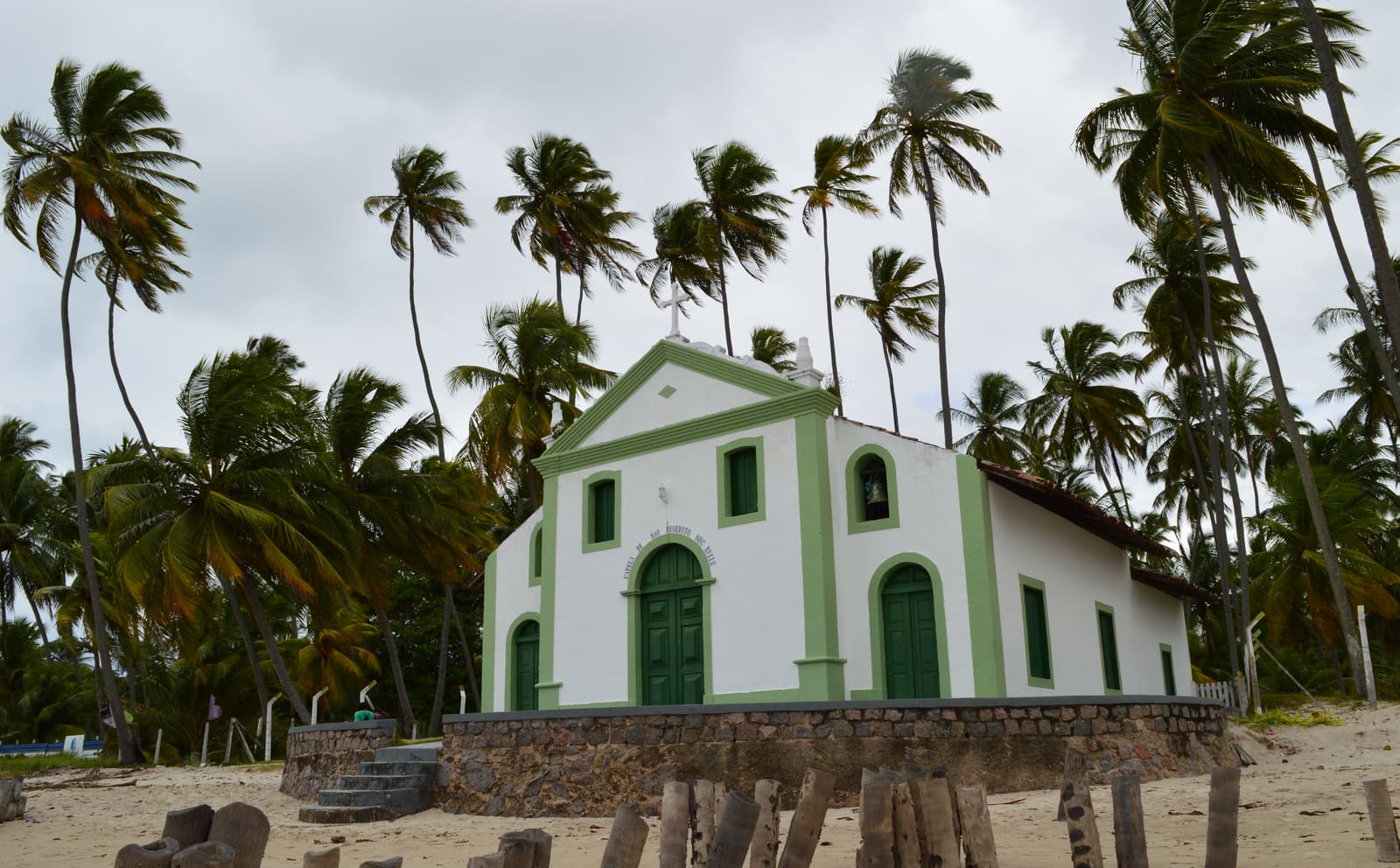
Tamandaré is known above all for one image. The Capela de São Benedito, a small white and green church built in the 18th century, stands on the sand of Carneiros Beach with its feet almost in the water. Coconut palms leaning over the sand, shallow, clear water, the chapel in the background: it is one of the most photographed scenes on the Brazilian coast. Strictly speaking, Carneiros lies within the neighboring municipality of Rio Formoso, but it is Tamandaré that organizes access, trips and most of the lodging. In practice, the two names go together.
Past the coconut grove at Carneiros, the Rio Formoso flows into the sea. On one side is the river, calm and muddy; on the other, the Atlantic, green and salty, with a strip of mangrove between the two. From there, catamaran or jangada (traditional sailing raft) trips head out to the natural pools that form on the coral reefs at low tide, a route that often also includes the clay bath at Guadalupe. Farther south, Campas Beach repeats the formula of reefs and calm water, with simple kiosks right on the beach and far fewer people. Tamandaré Beach, in the municipal seat, has a full range of facilities and is home to the Forte de Santo Inácio de Loyola, built from the 17th century onward against Dutch invasions. Remodeled later in the Vauban style, it is now a small museum with a lighthouse that has operated since 1902.
Much of Tamandaré's beach infrastructure is made up of beach bars that work on a minimum-order basis. You sit at a table, order something and stay the day; this applies above all to Carneiros, where chairs and umbrellas are usually free for those who order on the spot. The region is part of the Costa dos Corais Environmental Protection Area, so not stepping on the reefs is a basic rule. It is about 106 km from Recife, almost 2 hours by car on the BR-101 and then the PE-060/PE-076. It works well as an add-on for anyone already in Porto de Galinhas, farther north.
Updated on October 19, 2026
Coconut palms leaning over white sand, shallow, calm water and the 18th-century Capela de São Benedito with its feet almost in the water, one of the most photographed settings on the Brazilian coast. The beach lies within the neighboring municipality of Rio Formoso, but access is organized from Tamandaré.
The beach of the municipal seat, with the region's fullest range of restaurants and pousadas (small inns), calm water and the Forte de Santo Inácio de Loyola at the point.
On the coral reefs that line Carneiros and Campas, low tide forms pools of warm, clear water, good for floating and watching fish.
It leaves from Carneiros and follows the mangrove to the place where the river meets the sea, with stops for the clay bath at Guadalupe and at the natural pools. It can also be done by jangada.
A fortification built from the 17th century onward to protect the coast from Dutch invasions, later remodeled in the Vauban style. Today it is a small museum and houses the Tamandaré lighthouse, in operation since 1902.
A long strip of pale sand with coral reefs and calm water, simple kiosks and far less activity than Carneiros. A good option if you want peace and quiet.
The spot where the calm, muddy river meets the open sea, surrounded by living mangrove. A classic stop on the region's catamaran and jangada trips.
Brazil is in the Southern Hemisphere, so the seasons are the reverse of those in Europe and North America: summer falls between December and March and winter between June and August. In Tamandaré there is hardly any winter: the heat is constant all year. From December to March the average high is 31 °C; in July and August, the coolest months, the high is 28 °C and the low is 21 °C. The reference climate is that of the Recife station.
The rainiest months are June, with 391 mm over 22 days, May, with 317 mm over 19 days, and July, with 315 mm over 23 days. The driest months are November, with 39 mm over 7 days, October, with 53 mm over 9 days, and December, with 62 mm over 8 days.
The best window runs from October to December, with November the driest month. September (93 mm over 12 days) and January (107 mm over 11 days) are also among the least rainy. To see the natural pools, the tide matters too: they only appear at low tide, so check the day's tide table. If you travel between May and July, expect rain on 19 to 23 days a month, with no guarantee of clear weather.
| Month | High | Low | Rain | Rainy days | Rating |
|---|---|---|---|---|---|
| January | 31 °C | 23 °C | 107 mm | 11 | Fair |
| February | 31 °C | 23 °C | 127 mm | 11 | Fair |
| March | 31 °C | 23 °C | 197 mm | 15 | Fair |
| April | 30 °C | 23 °C | 269 mm | 17 | Fair |
| May | 30 °C | 22 °C | 317 mm | 19 | Not recommended |
| June | 29 °C | 22 °C | 391 mm | 22 | Not recommended |
| July | 28 °C | 21 °C | 315 mm | 23 | Fair |
| August | 28 °C | 21 °C | 187 mm | 19 | Fair |
| September | 29 °C | 22 °C | 93 mm | 12 | Fair |
| October | 30 °C | 22 °C | 53 mm | 9 | Good |
| November | 30 °C | 23 °C | 39 mm | 7 | Good |
| December | 31 °C | 23 °C | 62 mm | 8 | Good |
Monthly averages for 1991-2020 from INMET (Brazil's National Institute of Meteorology). The rating combines rainfall, temperature and humidity.
In summer (December to February), Tamandaré has highs of around 31 °C (88 °F) and lows of 23 °C (73 °F), and it is the wetter season, with about 99 mm of rain spread over about 10 days a month. The days are hot and call for beach time and shade.
In fall (March to May), Tamandaré has highs of around 30 °C (86 °F) and lows of 23 °C (73 °F), and it is the wetter season, with about 261 mm of rain spread over about 17 days a month. The days are hot and call for beach time and shade.
In winter (June to August), Tamandaré has highs of around 28 °C (82 °F) and lows of 21 °C (70 °F), and it is the wetter season, with about 298 mm of rain spread over about 21 days a month. The days are hot and call for beach time and shade.
In spring (September to November), Tamandaré has highs of around 30 °C (86 °F) and lows of 22 °C (72 °F), and it is the driest time of year, with about 62 mm of rain a month. The days are hot and call for beach time and shade.
Weather, crowds, prices and what is happening at the destination in each period. Tap a month to open its full page; the colored dot shows how good the time is for a visit.
A program of concerts and activities on the waterfront at the peak of the season, when the town receives the most visitors.
A June festival with quadrilha square dancing and forró, following Pernambuco's tradition for the month.
New Year's Eve at the most photographed beach in Pernambuco, with seaside parties and the chapel lit up.
Recurring annual events: exact dates change every year, so confirm them before you plan your trip.
The gateway airport is Recife/Guararapes International Airport (REC), in Recife, about 106 km from Tamandaré. The route follows the BR-101 and then the PE-060/PE-076.
By road, Tamandaré is 106 km from Recife (about 1 h 50 min), 57 km from Porto de Galinhas (1 hour) and 200 km from Maceió (about 3 hours). Routes and airlines flying into Recife from each country change often, so it is safest to check them when you plan your trip.
Tamandaré is the gateway to the region: access to Carneiros, the catamaran and jangada trips and most of the pousadas are organized from there. Tamandaré Beach, in the municipal seat, has the fullest range of restaurants and pousadas. It pays to choose according to what you want: the municipal seat for more services, or a place near Carneiros or Campas to be closer to the quieter beaches.
Rates change with the dates: confirm the price on Booking.com.
October to December is the driest period, with 39 to 62 mm of rain a month, and November is the driest. From May to July it rains much more, peaking in June. The heat and the warm sea last all year.
Administratively, the beach lies within the municipality of Rio Formoso. But access, catamaran and jangada trips and most of the pousadas are organized from Tamandaré, which is the gateway to the region.
They form on the coral reefs at low tide, at Carneiros and at Campas. Check the day's tide table before heading out on a catamaran or jangada trip.
Two to three days is enough to see Carneiros, Tamandaré Beach and the Forte de Santo Inácio, with room for a quiet day at Campas.
No. The beach itself is public, like every beach in Brazil. What usually costs money are the facilities: chairs, umbrellas and parking generally come with ordering at the beach bars on the waterfront.
Yes, especially if you enjoy history. It is the only fortification in Pernambuco outside the Recife metropolitan region, built against Dutch invasions, and today it works as a museum, with the Tamandaré lighthouse in operation since 1902.
The weather and population data in this guide come from official agencies and open databases. Entry requirements and health recommendations change: always check the official source linked.