
10· 1 review
Ubatuba Northern Islands Boat Tour
Don't pass up this boat tour of Ubatuba's northern islands, where we'll sail through breathtaking natural landscapes and enjoy a truly delightful adventure!
7 h
from US$ 99
Ubatuba is worth 4 to 5 days: to see several beaches in the north and south, hike a trail, visit Projeto Tamar (a sea turtle conservation program) and still have time to rest. The driest months run from May to August, with highs of 24 to 26 °C and 74 to 123 mm of rain; summer, from December to March, is hotter and much rainier (up to 313 mm in January).
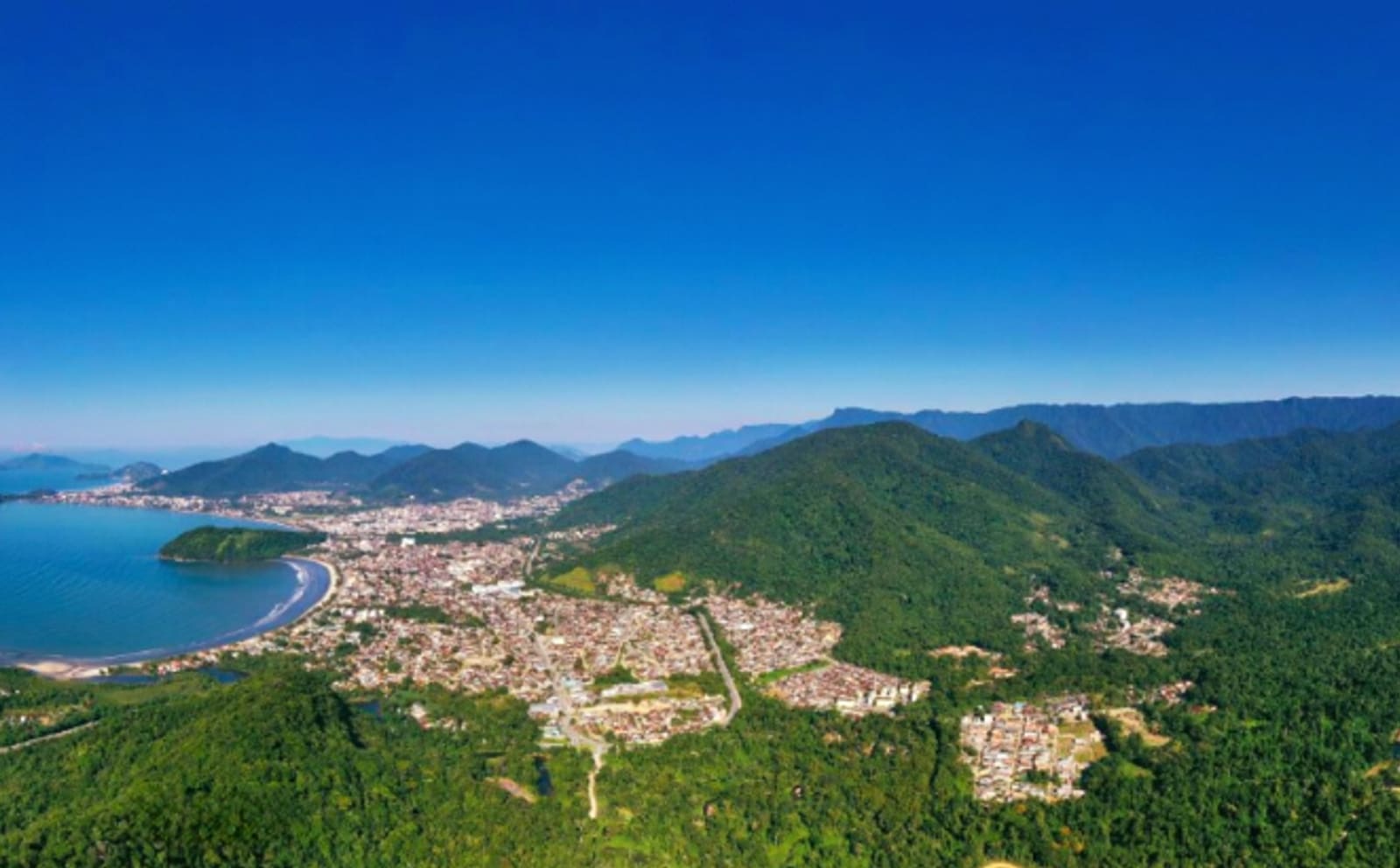
Ubatuba is a town of beaches: more than a hundred, spread along 100 km of coast where the Serra do Mar meets the ocean. A caiçara (traditional coastal community) stronghold on the north coast of São Paulo state, it was once a coffee port and is now one of the favorite escapes for people from São Paulo, especially surfers: Itamambuca is one of the most famous waves in the country. Between the Atlantic Forest and the sea, it alternates urban beaches with full facilities and wild coves you reach by trail.
Ubatuba is one of the rainiest towns in Brazil: the Serra do Mar traps the moisture coming off the ocean and drops more than 2,500 mm of rain a year. Summer, from December to March, is hot, humid and the rainiest, with frequent downpours; winter, from June to August, is cooler and drier, with cleaner water and fewer people. Do not expect guaranteed sun: here the rain is part of the landscape and keeps the forest lush all year.
The plan is the beach, and the choice is between two worlds. The beaches in the center and south (Grande, Tenório, Lázaro, Domingas Dias) have facilities, kiosks and calmer water, good for families. Those in the north (Félix, Itamambuca, Prumirim, Almada) are wilder, with surf and nature, and some can only be reached by trail. Beyond the sand there are Projeto Tamar, Anchieta Island by boat and the small historic center. It is a destination for driving the coast road from beach to beach, without hurry.
Updated on October 19, 2026
The most famous beach among surfers, venue for stages of national and world championships, surrounded by forest and a river.
A pale-sand beach framed by Atlantic Forest, with rough water and kiosks along the shore.
A beach with clear water and reddish sand, popular for surfing and diving.
A beach with calm water and well-equipped kiosks in the south of town, ideal for families with children.
A quiet beach at the far north, with a caiçara village and trail access to the untouched Praia Brava.
The only base of Projeto Tamar (a sea turtle conservation program) in the state of São Paulo, with tanks and aquariums of sea turtles.
The second largest island on the north coast of São Paulo, with beaches, trails and diving spots, reached by boat.
An old seaside core with a mother church, a fish market, a promenade and the statue of Anchieta.
Brazil is in the Southern Hemisphere, so the seasons are the reverse of those in Europe and North America: summer falls between December and March and winter between June and August. In Ubatuba summer is hot: February is the hottest month, with an average high of 31 °C. In July, the coolest, the high is 24 °C and the low is 14 °C.
Ubatuba is one of the rainiest towns in Brazil and it rains all year. The rainiest months are January, with 313 mm over 17 days, March, with 311 mm over 16 days, and February, with 291 mm over 15 days. The driest months are August, with 74 mm over 8 days, July, with 93 mm over 8 days, and June, with 94 mm over 7 days.
The window with the least rain runs from May to August, with June having the fewest rainy days: highs of 24 to 26 °C, cleaner water and fewer people. Summer brings the beach atmosphere, but also the heat, the humidity and the downpours. Since it rains in any month, bring a rain jacket and do not count on guaranteed sun.
| Month | High | Low | Rain | Rainy days | Rating |
|---|---|---|---|---|---|
| January | 30 °C | 22 °C | 313 mm | 17 | Not recommended |
| February | 31 °C | 22 °C | 291 mm | 15 | Not recommended |
| March | 30 °C | 21 °C | 311 mm | 16 | Not recommended |
| April | 28 °C | 19 °C | 233 mm | 13 | Fair |
| May | 26 °C | 16 °C | 123 mm | 9 | Good |
| June | 25 °C | 15 °C | 94 mm | 7 | Good |
| July | 24 °C | 14 °C | 93 mm | 8 | Good |
| August | 25 °C | 14 °C | 74 mm | 8 | Good |
| September | 25 °C | 16 °C | 197 mm | 13 | Fair |
| October | 26 °C | 18 °C | 246 mm | 15 | Fair |
| November | 28 °C | 19 °C | 264 mm | 16 | Fair |
| December | 29 °C | 20 °C | 280 mm | 17 | Fair |
Monthly averages for 1991-2020 from INMET (Brazil's National Institute of Meteorology). The rating combines rainfall, temperature and humidity.
In summer (December to February), Ubatuba has highs of around 30 °C (86 °F) and lows of 21 °C (70 °F), and it is the wetter season, with about 295 mm of rain spread over about 16 days a month. The days are hot and call for beach time and shade.
In fall (March to May), Ubatuba has highs of around 28 °C (82 °F) and lows of 19 °C (66 °F), and it is the wetter season, with about 222 mm of rain spread over about 13 days a month. The days are hot and call for beach time and shade.
In winter (June to August), Ubatuba has highs of around 25 °C (77 °F) and lows of 14 °C (57 °F), and it is the wetter season, with about 87 mm of rain spread over about 8 days a month. Temperatures are pleasant for sightseeing all day.
In spring (September to November), Ubatuba has highs of around 26 °C (79 °F) and lows of 18 °C (64 °F), and it is the wetter season, with about 236 mm of rain spread over about 15 days a month. Temperatures are pleasant for sightseeing all day.
Weather, crowds, prices and what is happening at the destination in each period. Tap a month to open its full page; the colored dot shows how good the time is for a visit.
A food festival in the caiçara community of Almada (a traditional coastal fishing community), with shrimp dishes, music and local culture.
One of the oldest religious and cultural celebrations in the region, with processions, folia (traveling singers and musicians) and caiçara food.
New Year's Eve with concerts and fireworks on the beaches and downtown, at the peak of the summer season.
Recurring annual events: exact dates change every year, so confirm them before you plan your trip.
Ubatuba has no commercial airport. The nearest is São José dos Campos Airport (SJK), about 140 km away, with few commercial flights. Guarulhos International Airport (GRU), farther away at about 205 km, usually has more options.
The final stretch is by road. From São Paulo, Ubatuba is 225 km away (about 4 hours) via the Rodovia dos Tamoios and the Oswaldo Cruz, or via the Rio-Santos if you are coming along the coast. From Rio de Janeiro it is 310 km (about 5 hours) and from Paraty, 73 km (about 1 h 25 min).
Routes and airlines change often, so it is safest to check them when you plan your trip.
It pays to choose the area according to the type of beach. In the south (Lázaro, Domingas Dias, Tenório) the beaches are calmer and better equipped, suited to families; in the north (Félix, Itamambuca, Almada) they are wilder and made for surf. Since the beaches are spread over 100 km of coast along the Rio-Santos (BR-101), if you do not have a car you are limited to the central beaches, so it pays to stay close to the area you most want to explore.
Rates change with the dates: confirm the price on Booking.com.
Summer (December to March) is hot and has the beach atmosphere, but it is the rainiest and most crowded. From May to August it rains less, with highs of 24 to 26 °C, cleaner water and fewer people. Ubatuba gets rain all year, so do not count on guaranteed sun.
Four to five days is enough to see several beaches in the north and south, hike a trail, visit Projeto Tamar and still rest. With more than a hundred beaches spread out, you can come back many times.
It is one of the most famous surf spots in the country. Itamambuca, in the north, hosts championship stages; Vermelha do Norte, Félix and Prumirim also have waves. The beaches in the south are calmer, better for swimming with the family.
Practically yes. The beaches are spread over 100 km of coast linked by the Rio-Santos (BR-101), and many of the best are outside the center. Without a car, you are limited to the central beaches and organized trips.
The Serra do Mar, right behind the town, traps the moisture coming off the ocean and causes rain all year: Ubatuba is one of the rainiest towns in Brazil. The upside is the ever-green Atlantic Forest and full waterfalls.
They are neighbors on the Costa Verde (Green Coast) and complement each other. Ubatuba is raw beach country, with more than a hundred beaches and a surf scene. Paraty is a colonial historic town, with a cobblestone center and cachaça (sugarcane spirit). You can combine the two on a trip along the coast.
The weather and population data in this guide come from official agencies and open databases. Entry requirements and health recommendations change: always check the official source linked.


