
10· 6 reviews
Bombinhas Beaches Day Trip
This day trip to the beaches of Bombinhas will take you on a spectacular tour of the most beautiful coastline in the south of Brazil. You can't miss it!
12 h
from US$ 18
Bombinhas is worth 3 to 4 days: the central beaches, the climb up Morro do Macaco, diving at Sepultura and one more secluded beach, such as Tainha or Zimbros. The best window runs from April to November, with highs of 21 to 27 °C and 86 to 153 mm of rain a month. Summer, from December to March, reaches 30 °C and is rainier (up to 241 mm in January), with the central beaches packed.
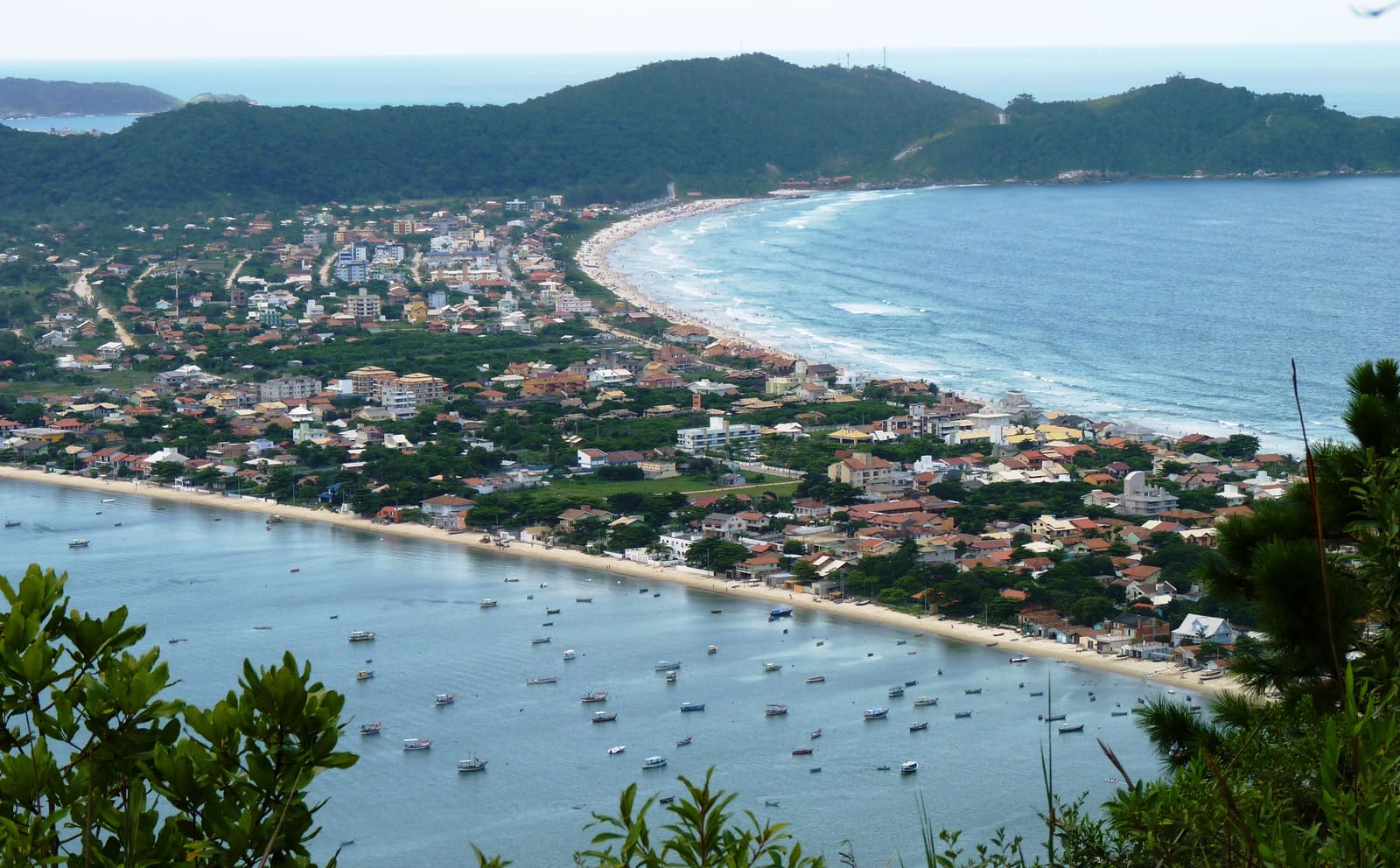
Bombinhas is a peninsula of a little over 30 km², wedged between the sea and the Atlantic Forest. No large river flows into the sea nearby, which leaves the water cleaner and a more transparent green than the Santa Catarina coastal average. That clarity earned the city the title of Santa Catarina's capital of eco-diving, awarded in 2013. Today the region has dozens of freediving and scuba sites, for beginners and for the more experienced.
The peninsula's rugged terrain multiplies the beaches: there are more than twenty, each with a different atmosphere. Bombas and Praia Central, linked by a single waterfront promenade, hold the bars, inns and shops; this is where the town becomes a real beach resort. Mariscal, farther south, has four kilometers of sand and waves for surfing. Sepultura hides a natural pool among rock outcrops, good for a first dive. Tainha, at the most secluded tip of the peninsula, can only be reached by a dirt road or by the Morro do Macaco trail. At the far north, Zimbros still has the feel of a fishing village, with boats anchored in the calm bay. Boat trips head out to the Arvoredo Marine Biological Reserve, a protected archipelago off the coast, where diving is allowed only at the southern tip of the island, under the control of Ibama (Brazil's federal environmental agency).
The climate follows the pattern of the Santa Catarina coast: a hot summer, from December to March, with highs near 29 °C and the central beaches packed; a mild, much emptier winter, with lows of about 13 °C and many bars closing earlier. In that low season Bombinhas shows another face: quiet streets, trails with no lines and beaches that would be impossible to enjoy in peace in high season. From November to April, the municipality charges an Environmental Preservation Fee at the entrance to the town, used for the upkeep of trails and beaches.
Updated on October 19, 2026
The two most developed beaches in the municipality, linked by a continuous waterfront promenade, hold most of Bombinhas's bars, inns and shops: the base for anyone who wants comfort in high season.
A four-kilometer strip of sand with clean water and medium waves, good for swimming and surfing, with stretches of preserved coastal scrub among the rock outcrops.
A small cove of transparent water among rock outcrops, with a natural pool formed by rocks and a short access trail. It is one of the classic spots for freediving and introductory dives in Bombinhas.
A secluded cove at the southern tip of the peninsula, far from development, with calm, crystal-clear water and a lookout along the way. It is reached by a dirt road or by the Morro do Macaco trail.
A protected federal archipelago off the coast, with diving authorized only at the southern tip of Ilha do Arvoredo, under the control of Ibama. Visibility of up to 15 meters in summer, with groupers, rays and turtles.
A trail of about 1.2 km through the Atlantic Forest to the highest point in Bombinhas, with six lookouts offering 360° views over the peninsula and a small natural history museum at the top.
A short strip of sand sheltered from the wind at the foot of Morro do Macaco, with calm water and views of the islands of the Arvoredo Reserve.
A fishing village at the far north of the municipality, with a cove of calm, clear water and boats anchored in the bay. It is the quietest and least touristy side of Bombinhas.
Brazil is in the Southern Hemisphere, so the seasons run opposite to those in Europe and North America: summer in Bombinhas falls between December and March and winter between June and August. Summer is hot, with highs of 28 to 30 °C (February is the hottest month, at 30 °C), and winter is mild: in July, the coolest month, the average high is 21 °C and the low is 13 °C.
The months with the least rain are June (86 mm over 8 days), August (93 mm over 8 days) and July (101 mm over 9 days). The wettest are January (241 mm over 17 days), February (198 mm over 16 days) and March (180 mm over 14 days).
In terms of weather, the best window runs from April to November, with May the best month. In those months the town empties out, which is good if you want quiet and diving with fewer people in the water, although some bars and tours cut their hours. Summer offers beach weather and all the infrastructure running, but with the central beaches packed and prices much higher. These are historical averages and do not guarantee the weather on any given day. The reference climate data is from the Florianópolis station.
| Month | High | Low | Rain | Rainy days | Rating |
|---|---|---|---|---|---|
| January | 29 °C | 22 °C | 241 mm | 17 | Fair |
| February | 30 °C | 22 °C | 198 mm | 16 | Fair |
| March | 29 °C | 21 °C | 180 mm | 14 | Fair |
| April | 27 °C | 19 °C | 116 mm | 10 | Good |
| May | 24 °C | 16 °C | 126 mm | 9 | Good |
| June | 22 °C | 14 °C | 86 mm | 8 | Good |
| July | 21 °C | 13 °C | 101 mm | 9 | Fair |
| August | 22 °C | 14 °C | 93 mm | 8 | Good |
| September | 22 °C | 15 °C | 147 mm | 11 | Fair |
| October | 24 °C | 18 °C | 153 mm | 13 | Fair |
| November | 26 °C | 19 °C | 147 mm | 13 | Fair |
| December | 28 °C | 21 °C | 177 mm | 15 | Fair |
Monthly averages for 1991-2020 from INMET (Brazil's National Institute of Meteorology). The rating combines rainfall, temperature and humidity.
In summer (December to February), Bombinhas has highs of around 29 °C (84 °F) and lows of 22 °C (72 °F), and it is the wetter season, with about 205 mm of rain spread over about 16 days a month. The days are hot and call for beach time and shade.
In fall (March to May), Bombinhas has highs of around 27 °C (81 °F) and lows of 19 °C (66 °F), and it is the wetter season, with about 141 mm of rain spread over about 11 days a month. Temperatures are pleasant for sightseeing all day.
In winter (June to August), Bombinhas has highs of around 22 °C (72 °F) and lows of 14 °C (57 °F), and it is the wetter season, with about 93 mm of rain spread over about 8 days a month. The weather is milder, good for walking and exploring without the summer heat.
In spring (September to November), Bombinhas has highs of around 24 °C (75 °F) and lows of 17 °C (63 °F), and it is the wetter season, with about 149 mm of rain spread over about 12 days a month. The weather is milder, good for walking and exploring without the summer heat.
Weather, crowds, prices and what is happening at the destination in each period. Tap a month to open its full page; the colored dot shows how good the time is for a visit.
The nearest airport is Ministro Victor Konder International Airport (NVT), in Navegantes, about 47 km away. Another option is Hercílio Luz International Airport (FLN), in Florianópolis, about 70 km away.
The final stretch is by land: take the BR-101 to KM 155 (Porto Belo) and then the SC-412, about 15 km to the center. From Florianópolis it is 79 km (about 1 h 20 min), from Balneário Camboriú 31 km (about 40 min) and from Curitiba 260 km (about 3 h 30 min).
Routes and airlines change often; the safest approach is to check them when planning your trip.
Bombas and Praia Central hold the bars, inns and shops, which makes them the most convenient base in high season. Mariscal, farther south, is a good option if you want a long beach with waves, and Zimbros, at the far north, keeps the fishing-village atmosphere. The more remote beaches, such as Tainha, are quiet but far from services. Since the peninsula is small and there is only one way into town, in summer it is best to choose a place to stay near what you most want to visit, to avoid traffic.
Rates change with the dates: confirm the price on Booking.com.
Summer (December to March) has the weather and all the infrastructure, but it packs the central beaches and prices rise sharply. In terms of weather, the best window runs from April to November: the town empties out, which is good if you want quiet and diving with fewer people, although some bars and tours cut their hours.
The peninsula has dozens of transparent-water dive sites, with no large rivers flowing into the coast, and it is a few minutes by boat from the Arvoredo Marine Biological Reserve. In 2013 the city received the title of Santa Catarina's capital of eco-diving, and today it has dive schools for every level.
Three to four days are enough to see the central beaches, climb Morro do Macaco, dive at Sepultura and stretch out to a more secluded beach, such as Tainha or Zimbros.
Yes, especially on the calm-water beaches such as Mariscal, Zimbros and the natural pool at Sepultura. The central beaches (Bombas and Bombinhas) have the full infrastructure of bars, inns and equipment rental.
Recreational diving at Ilha do Arvoredo is allowed only at the southern tip, controlled by Ibama, with twenty divers per day. Local schools offer introductory dives for beginners there and at easier spots, such as Sepultura, within the municipality itself.
Difficult: the peninsula is small, the streets are narrow and the flow toward the more remote beaches adds to the single access via the SC-412. Getting to the beaches early and avoiding peak hours helps a lot.
The weather and population data in this guide come from official agencies and open databases. Entry requirements and health recommendations change: always check the official source linked.