
9.4· 177 reviews
São Paulo Complete Tour
Come with us to discover all the most iconic places in São Paulo. Along the way, you'll see fantastic buildings, and a lot of world-class art!
7 h
from US$ 77
São Paulo is worth 3 to 5 days: museums such as MASP and the Pinacoteca, Ibirapuera Park, neighborhoods like Vila Madalena and Liberdade, and plenty of good eating. The driest months run from May to August, with 32 to 66 mm of rain and highs of 23 to 25 °C; summer, from December to March, is hotter and much rainier.
São Paulo began as a Jesuit school on a hilltop in 1554, and it took centuries to become what it is today: the largest city in Brazil and in the entire Southern Hemisphere, with more than 11 million inhabitants. Coffee made it rich in the 19th century; industry and waves of immigration (Italians, Japanese, Lebanese and migrants from the Northeast) turned it into a metropolis of many cities within one. It is not a city of a single postcard: it is a collection of neighborhoods, each with its own accent, its own food and its own rhythm.
At more than 700 meters above sea level, São Paulo has a climate that can change from one hour to the next. Summer, from December to March, is hot and rainy, with heavy downpours in the late afternoon. Winter, from June to August, is dry and cooler, with cold mornings and mild afternoons. There is no beach and no coastal heat: this is a plateau city of mist and drizzle, made for people who enjoy indoor plans.
What sets São Paulo apart is its density. Museums like MASP and the Pinacoteca, the greenery of Ibirapuera, the street art of Vila Madalena, Japanese Liberdade, the Mercado Municipal and a restaurant scene that runs from the corner bar to fine dining, all within a subway ride. It is a city for eating well, walking a lot and getting lost on purpose, without any obligation to see everything, because no one ever does.
Updated on October 13, 2026
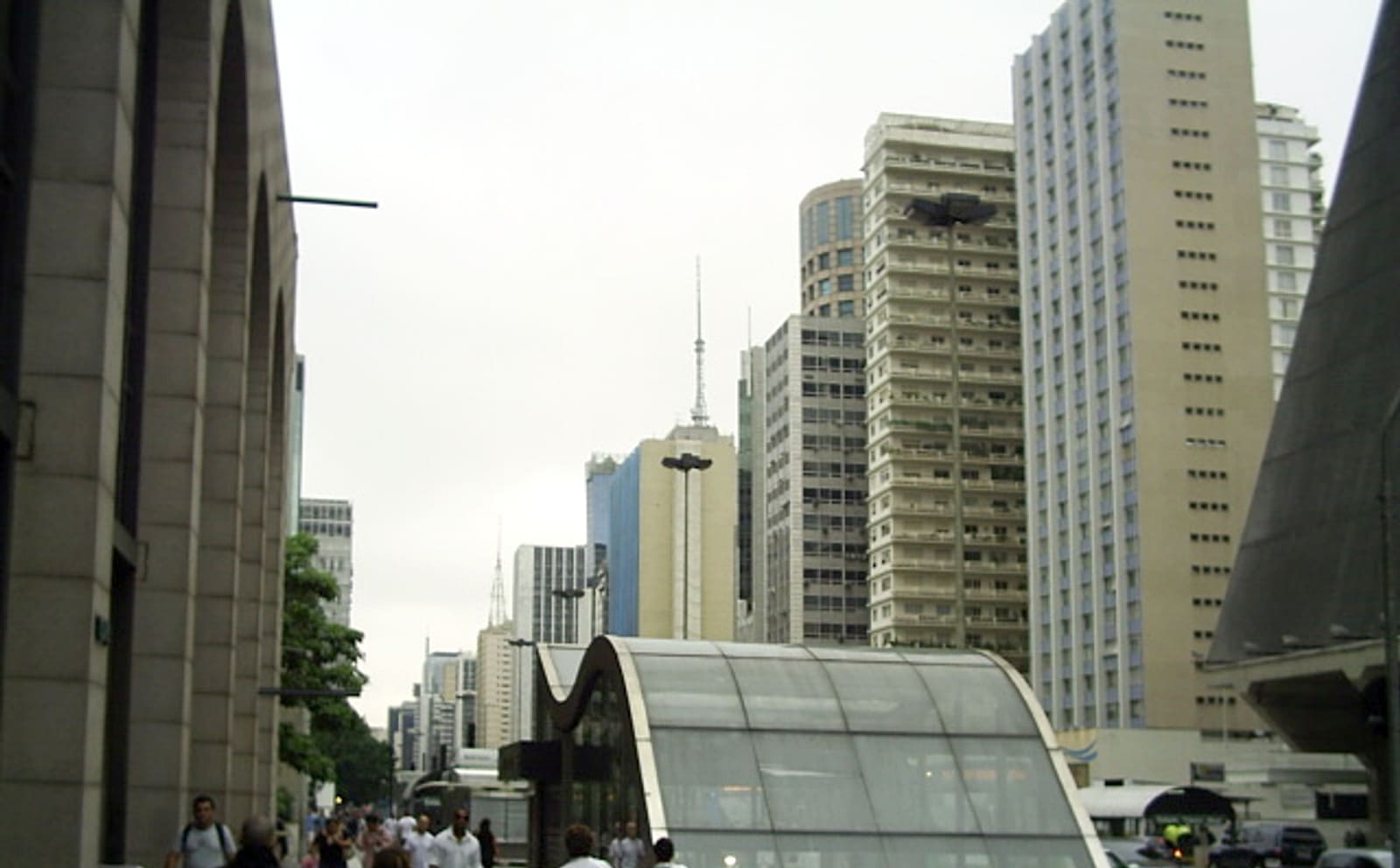
The city's main avenue, with almost 3 km of museums, cultural centers and historic buildings. On Sundays it is closed to cars and open to pedestrians.
The São Paulo Museum of Art, in the open span along Paulista, holds the most important collection of European art in the Southern Hemisphere.
The largest urban park of the expanded center, with lakes, a bike path and cultural venues such as the MAM (modern art museum) and the Museu Afro Brasil.
The Mercadão, from 1933, is famous for its mortadella sandwich and its pastel de bacalhau (fried salt cod pastry), beneath stained-glass windows depicting food production.
The oldest art museum in the state, from 1905, with a collection devoted to Brazilian art from the 19th century to today.
A set of alleys in Vila Madalena with the largest concentration of graffiti and street art in the city.
A stronghold of Asian culture, with restaurants, Oriental shops and a street fair on weekends.
The largest hub of popular commerce in Latin America, with thousands of general goods and notions shops.
Brazil is in the Southern Hemisphere, so the seasons are the reverse of those in Europe and North America: summer falls between December and March and winter between June and August. In São Paulo summer is hot and rainy, with highs of 28 to 29 °C and lows of 19 to 20 °C; in July, the coolest month, the average high is 23 °C and the low is 13 °C.
For walking with little rain, the best time is from May to September. August is the driest month, with 32 mm over 4 days, and July follows with 48 mm over 4 days. January is the rainiest, with 292 mm over 17 days, followed by February (258 mm) and December (231 mm).
São Paulo is not a beach destination, so it has no high season set by the weather: you can visit all year. The dry winter is comfortable for exploring the city on foot, and in the rainy months there are always the museums and cultural centers.
| Month | High | Low | Rain | Rainy days | Rating |
|---|---|---|---|---|---|
| January | 29 °C | 19 °C | 292 mm | 17 | Fair |
| February | 29 °C | 20 °C | 258 mm | 14 | Fair |
| March | 28 °C | 19 °C | 229 mm | 13 | Fair |
| April | 27 °C | 18 °C | 87 mm | 6 | Good |
| May | 23 °C | 15 °C | 66 mm | 6 | Good |
| June | 23 °C | 14 °C | 60 mm | 5 | Very good |
| July | 23 °C | 13 °C | 48 mm | 4 | Very good |
| August | 25 °C | 13 °C | 32 mm | 4 | Very good |
| September | 25 °C | 15 °C | 83 mm | 7 | Very good |
| October | 27 °C | 17 °C | 127 mm | 10 | Good |
| November | 27 °C | 17 °C | 144 mm | 11 | Good |
| December | 28 °C | 19 °C | 231 mm | 13 | Fair |
Monthly averages for 1991-2020 from INMET (Brazil's National Institute of Meteorology). The rating combines rainfall, temperature and humidity.
In summer (December to February), São Paulo has highs of around 29 °C (84 °F) and lows of 19 °C (66 °F), and it is the wetter season, with about 260 mm of rain spread over about 15 days a month. The days are hot and call for beach time and shade.
In fall (March to May), São Paulo has highs of around 26 °C (79 °F) and lows of 17 °C (63 °F), and it is the wetter season, with about 127 mm of rain spread over about 8 days a month. Temperatures are pleasant for sightseeing all day.
In winter (June to August), São Paulo has highs of around 24 °C (75 °F) and lows of 13 °C (55 °F), and it is the driest time of year, with about 47 mm of rain a month. The weather is milder, good for walking and exploring without the summer heat.
In spring (September to November), São Paulo has highs of around 26 °C (79 °F) and lows of 16 °C (61 °F), and it is the wetter season, with about 118 mm of rain spread over about 9 days a month. Temperatures are pleasant for sightseeing all day.
Weather, crowds, prices and what is happening at the destination in each period. Tap a month to open its full page; the colored dot shows how good the time is for a visit.
A free 24-hour cultural marathon run by the city government, with concerts, performances and exhibitions across the city.
Held on Avenida Paulista since 1997, it is one of the largest LGBT+ pride parades in the world.
The Brazilian round of Formula 1, held at the Interlagos racetrack in the south of the city.
Recurring annual events: exact dates change every year, so confirm them before you plan your trip.
The gateway from abroad is Guarulhos International Airport (GRU), in the municipality of Guarulhos, about 25 km from downtown. It handles the international flights and the largest flight network.
From the airport you can reach the city by executive bus or by the Line 13-Jade train.
The other airport, Congonhas (CGH), is about 8 km away and serves domestic flights only. Routes and airlines flying in from each country change often, so it is safest to check them when you plan your trip.
São Paulo is big and traffic eats up time, so it pays to group each day in one region and choose where to stay based on what you most want to see. The most common areas for visitors are Paulista and the Jardins, the Centro and Liberdade, and Vila Madalena and Pinheiros. Since the subway and trains cover a good share of the tourist sights, it is practical to stay near a station.
Rates change with the dates: confirm the price on Booking.com.
Any time works, because there is no beach season. From May to September it is drier (32 to 83 mm a month) with highs of 23 to 25 °C, ideal for walking; in summer it rains much more, up to 292 mm in January.
Three to five days let you combine museums, parks, neighborhoods and the food scene without rushing. The city is big and traffic eats up time, so it pays to organize your itinerary by region.
The airport is about 25 km from the center. There is an executive bus and the Line 13-Jade train to the city. Congonhas, which is closer (about 8 km), serves domestic flights only.
Like any metropolis, it calls for some care. Avoid showing off your phone and bag in crowded areas and at night, and prefer ride-hailing apps to walking alone on empty streets.
No. The subway and trains cover a good share of the tourist sights and are faster than a car at rush hour. For everything else, ride-hailing apps work well.
It is an ideal city for rainy days: museums, cultural centers, shopping malls, bookstores and many restaurants. MASP, the Pinacoteca and the Mercado Municipal all work well as indoor plans.
The weather and population data in this guide come from official agencies and open databases. Entry requirements and health recommendations change: always check the official source linked.


