
8.6· 92 reviews
Praia do Forte & Praia de Guarajuba Day Trip
On this day trip to Praia do Forte and Praia de Guarajuba, you'll discover two of the most popular destinations on the northern coast of Salvador de Bahía.
8 h
from US$ 30
Salvador is worth 4 to 5 days: the Pelourinho and the historic center, the beaches of the Barra, a boat trip around the Bay of All Saints and Itaparica Island. The driest months run from October to December, with highs of 29 to 31 °C and 63 to 108 mm of rain a month; from April to July it rains much more, up to 302 mm in May.
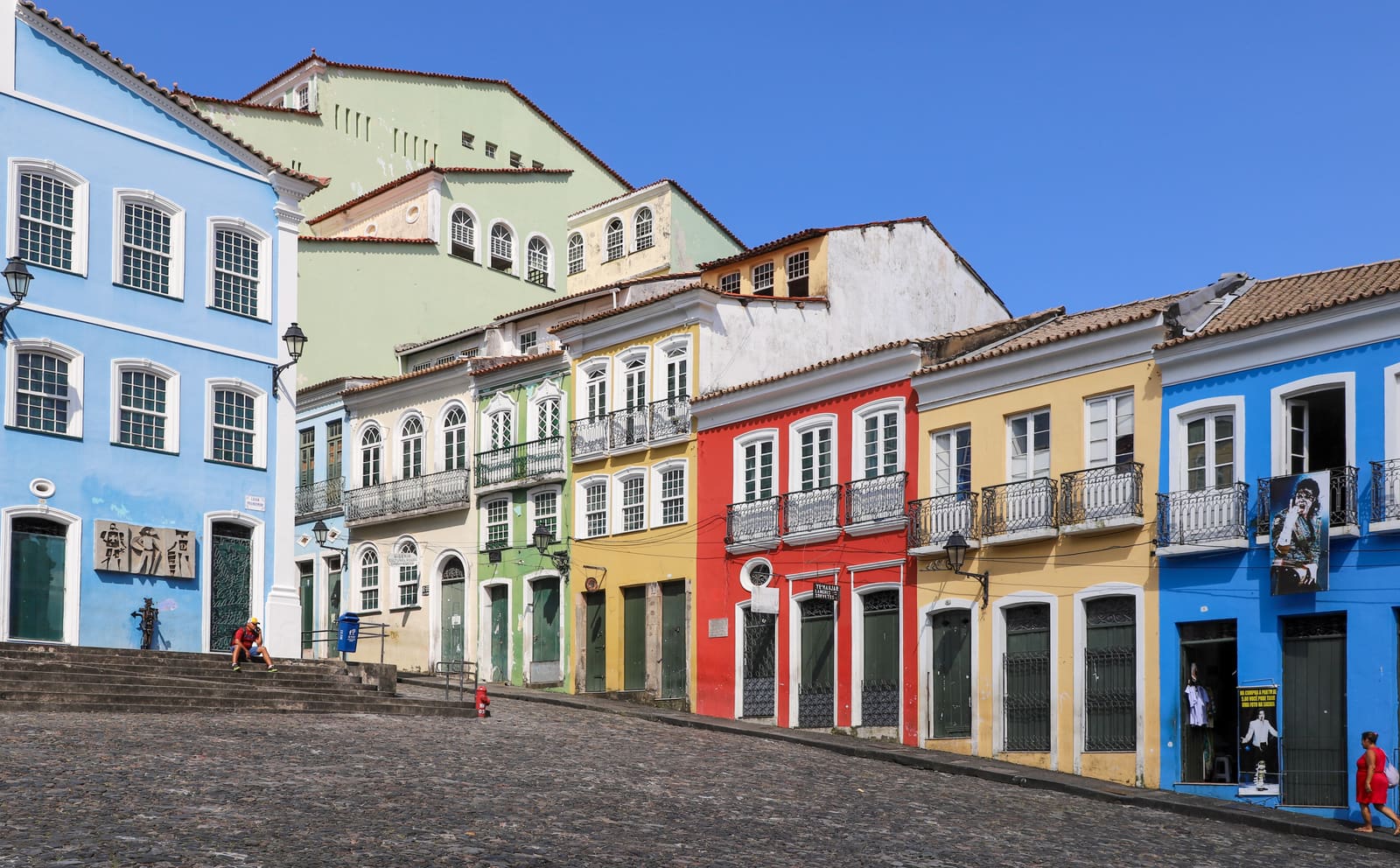
Salvador was the first capital of Brazil, from 1549 to 1763, and the city still shows it on every corner. It was founded on top of a bluff of almost 70 meters facing the Bay of All Saints, and for that reason it is split into two levels: the Cidade Alta (Upper City), where power and the churches were, and the Cidade Baixa (Lower City), the one of the port and trade. To link them without climbing hills, the Lacerda Elevator was built, in operation since 1873. The Pelourinho, in the heart of the Upper City, has been a UNESCO World Heritage Site since 1985 and holds the largest ensemble of colonial and Baroque architecture in Latin America.
The Afro-Brazilian heritage can be felt in the food, the religion and the music: the acarajé sold by the baianas de tabuleiro (street vendors in traditional white dress), candomblé, the capoeira played in the squares and the axé music that shaped Carnival. Salvador's Carnival, with its trios elétricos (music trucks), runs along three circuits across the city. The calendar of festivals is long: the Lavagem do Bonfim, in January, brings crowds dressed in white to the church in the Itapagipe neighborhood, and the festival of Iemanjá, on February 2 in Rio Vermelho, fills the sea with flowers and offerings.
Salvador is a city to take slowly. Porto da Barra beach, framed by the Forte de Santa Maria, is considered one of the best urban beaches in the world for watching the sunset, with calm water because it lies inside the bay. The Barra Lighthouse marks the entrance to the Bay of All Saints and houses a nautical museum. Boats leave the city for Itaparica Island and for the archipelago of the bay. The heat lasts all year, so any month works for a trip; the driest quarter runs from October to December.
Updated on October 13, 2026
The largest colonial and Baroque ensemble in Latin America, a UNESCO World Heritage Site since 1985, with colorful mansions, gilded churches and capoeira on the stone hills.
In operation since 1873, it covers the almost 70 meters between the Upper City and the Lower City in under half a minute, with an open view of the Bay of All Saints.
It marks the entrance to the Bay of All Saints, at the Forte de Santo Antônio. It houses the Nautical Museum and is one of the city's best spots for watching the sunset.
An 18th-century church on top of the Sacred Hill, known for its colorful ribbons and for the Lavagem do Bonfim, one of the largest expressions of popular faith in the country.
A traditional market in the Lower City, facing the sea, with Bahian crafts, capoeira instruments, spices and restaurants serving regional food on the terrace.
A small beach inside the bay, with calm, warm water, framed by two forts. Chosen as one of the best urban beaches in the world for watching the sun set into the sea.
The largest sea island in Brazil, across the bay, with calm-water beaches, freshwater springs, fishing villages and colonial mansions. You get there by boat or catamaran.
In the heart of the Pelourinho, it is one of the greatest exponents of Brazilian Baroque, with interiors almost entirely covered in gilded carving and panels of Portuguese tiles.
Brazil is in the Southern Hemisphere, so the seasons are the reverse of those in Europe and North America. In Salvador you barely notice, because the heat lasts all year: from January to March the high is 31 °C and the low is 24 °C, and in July and August, the coolest months, the high drops to 27 °C and the low to 21 °C.
The driest, sunniest time runs from October to December: 91 mm in October, 108 mm in November and 63 mm in December, the driest month, with 7 rainy days and highs of 29 to 31 °C. From April to July it rains much more: May is the wettest, with 302 mm over 18 days, and June adds 19 rainy days with 238 mm.
The festivals are concentrated from January to March: the Lavagem do Bonfim in January, the festival of Iemanjá on February 2 and the street Carnival fill the city with people. Anyone traveling on those dates should book lodging in advance.
| Month | High | Low | Rain | Rainy days | Rating |
|---|---|---|---|---|---|
| January | 31 °C | 24 °C | 77 mm | 9 | Fair |
| February | 31 °C | 24 °C | 99 mm | 9 | Fair |
| March | 31 °C | 24 °C | 147 mm | 11 | Fair |
| April | 30 °C | 24 °C | 285 mm | 16 | Not recommended |
| May | 28 °C | 23 °C | 302 mm | 18 | Fair |
| June | 27 °C | 22 °C | 238 mm | 19 | Fair |
| July | 27 °C | 21 °C | 194 mm | 18 | Fair |
| August | 27 °C | 21 °C | 130 mm | 16 | Fair |
| September | 28 °C | 22 °C | 99 mm | 11 | Fair |
| October | 29 °C | 23 °C | 91 mm | 8 | Good |
| November | 30 °C | 23 °C | 108 mm | 8 | Good |
| December | 31 °C | 24 °C | 63 mm | 7 | Good |
Monthly averages for 1991-2020 from INMET (Brazil's National Institute of Meteorology). The rating combines rainfall, temperature and humidity.
In summer (December to February), Salvador has highs of around 31 °C (88 °F) and lows of 24 °C (75 °F), and it is the wetter season, with about 80 mm of rain spread over about 8 days a month. The days are hot and call for beach time and shade.
In fall (March to May), Salvador has highs of around 30 °C (86 °F) and lows of 24 °C (75 °F), and it is the wetter season, with about 245 mm of rain spread over about 15 days a month. The days are hot and call for beach time and shade.
In winter (June to August), Salvador has highs of around 27 °C (81 °F) and lows of 21 °C (70 °F), and it is the wetter season, with about 187 mm of rain spread over about 18 days a month. Temperatures are pleasant for sightseeing all day.
In spring (September to November), Salvador has highs of around 29 °C (84 °F) and lows of 23 °C (73 °F), and it is the wetter season, with about 99 mm of rain spread over about 9 days a month. The days are hot and call for beach time and shade.
Weather, crowds, prices and what is happening at the destination in each period. Tap a month to open its full page; the colored dot shows how good the time is for a visit.
A procession of baianas (women in traditional Bahian dress) who wash the steps of the Church of Senhor do Bonfim, on the second Thursday of January.
An Afro-Brazilian celebration on February 2 at Rio Vermelho Beach, with offerings to the orixá (deity) Iemanjá.
The city's biggest street party, with trios elétricos (sound trucks) and blocos on circuits over several days (moveable date).
June festivities for Saint Anthony, Saint John and Saint Peter throughout the month, with forró (northeastern dance music) and traditional foods.
Recurring annual events: exact dates change every year, so confirm them before you plan your trip.
The gateway from abroad is Salvador International Airport (SSA), whose full name is Deputado Luís Eduardo Magalhães, about 25 km from the center.
Routes and airlines that reach Salvador change often, so it is safest to check them when you plan your trip. Within the city, you can use ride-hailing apps and buses.
To get to Itaparica Island, boats and catamarans leave from the Maritime Terminal, in the Lower City, with crossings of 20 to 50 minutes depending on the vessel. There is also a ferry that carries vehicles from the São Joaquim Terminal.
The Barra is a practical area to stay: it has Porto da Barra beach and the Barra Lighthouse, with plenty of activity and sunsets over the bay. The Pelourinho, in the Upper City, lets you sleep inside the historic center. Between one neighborhood and another, especially at night, it is best to get around by ride-hailing app.
Rates change with the dates: confirm the price on Booking.com.
October to December, the driest and sunniest quarter, with 63 to 108 mm of rain a month and highs of 29 to 31 °C. If you prefer festivals, January brings the Lavagem do Bonfim and February the festival of Iemanjá and the street Carnival. The rainiest months are April to July.
Four to five days are enough for the Pelourinho and the historic center, the beaches of the Barra and Porto da Barra, a boat trip around the Bay of All Saints and a crossing to Itaparica Island.
Salvador International Airport (SSA) is about 25 km from the center. Within the city, ride-hailing apps and buses are available.
The historic area is busy and has tourist police during the day and in the early evening. As in any big city, walk on streets with people around, avoid empty alleys and use a ride-hailing app to get from one neighborhood to another at night.
Boats and catamarans leave from Salvador's Maritime Terminal, in the Lower City, with crossings of 20 to 50 minutes depending on the vessel. There is also a ferry that carries vehicles from the São Joaquim Terminal.
It is a black-eyed pea fritter fried in dendê (palm oil), filled with vatapá (a creamy bread-based paste), shrimp and vinaigrette, sold by the baianas de tabuleiro in their traditional white clothing. The classic spots are in Rio Vermelho and the Barra.
The weather and population data in this guide come from official agencies and open databases. Entry requirements and health recommendations change: always check the official source linked.


