Diamantina calls for about 3 days: the historic center at a relaxed pace and at least one excursion in the surroundings, such as Biribiri or the Gruta do Salitre. The window with the best weather runs from May to September; July, the driest month, records 4.9 mm of rain over 1 day, with a high of 21.4 °C and a low of 11.3 °C. Summer is warmer (a high of 26 °C in February) and very rainy (284.2 mm in December, spread over 17 days).
What to expect in Diamantina
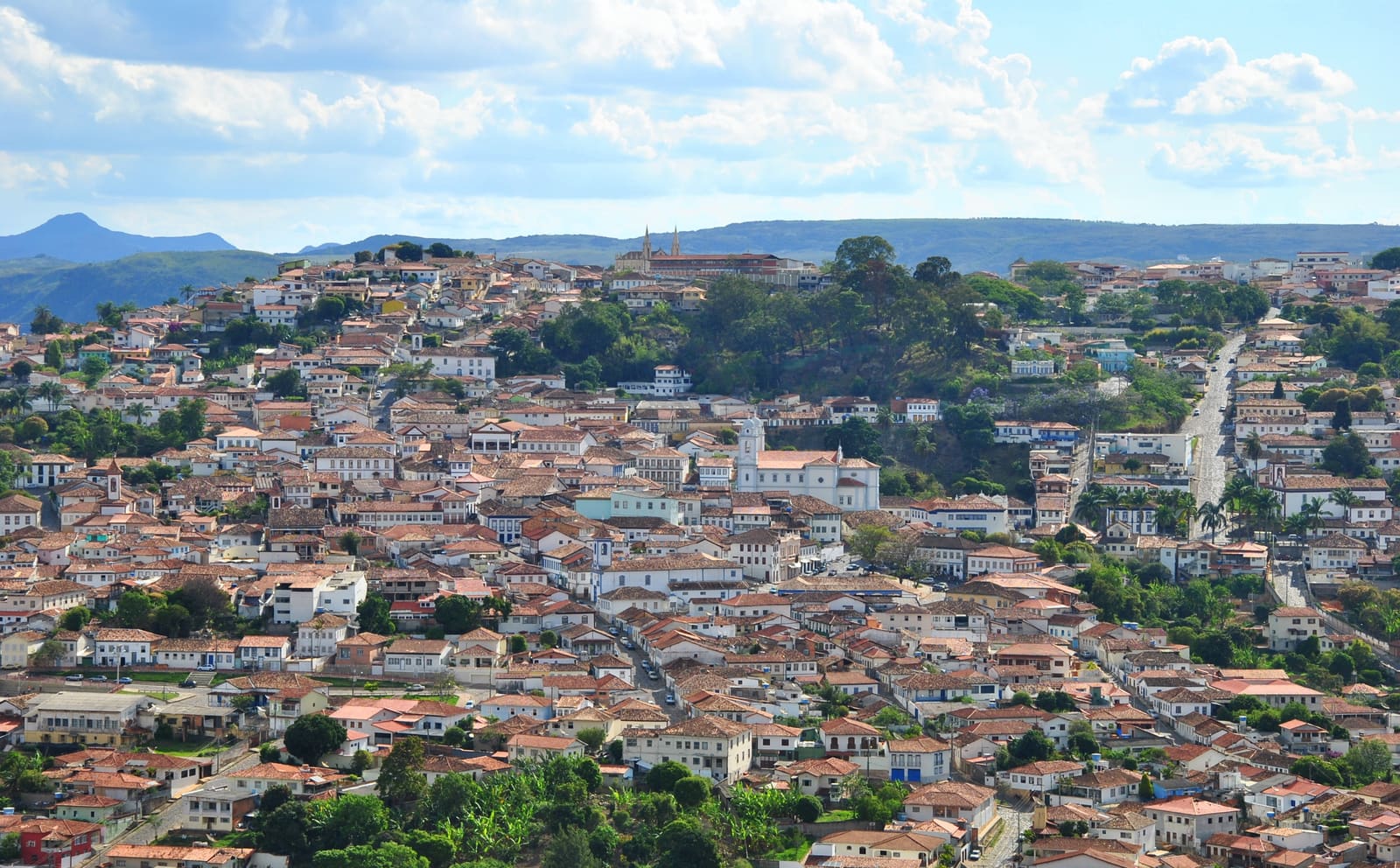
Diamantina began as Arraial do Tijuco, a prospectors' settlement wedged into the mountains of what is now the Serra do Espinhaço, when the gold of the region began to yield diamonds as well, in the early 18th century. The stone turned the arraial into the administrative capital of the Diamond District, under strict control by the Portuguese Crown, and left as its legacy a historic center of colonial houses and Baroque churches so well preserved that UNESCO recognized it as a World Heritage Site in 1999. It is also the land of Chica da Silva, an enslaved Black woman who became one of the richest and most powerful figures of the colony, and of Juscelino Kubitschek, the president who founded Brasília and spent his childhood on the town's steep streets.
At almost 1,300 meters above sea level, high in the Serra do Espinhaço, Diamantina has a well-defined mountain climate: a rainy summer, from November to March, with stormy afternoons, and a dry winter, cold by Minas Gerais standards, from June to August, when the thermometer can approach 10 °C at night. The altitude also brings clear days and strong light, ideal for photographing the white and colorful houses set against the sky.
Diamantina's way of life shows in the Vesperatas, serenades in which musicians play from the balconies of the townhouses on Rua da Quitanda while the audience watches from below, in the street, a tradition that has become cultural heritage of Minas Gerais. Outside the historic center, the Serra do Espinhaço offers waterfalls and trails, such as those in the heritage-listed district of Biribiri, and neighboring towns like Serro, famous for its artisanal cheese, complete an itinerary that mixes history, music and nature.
Updated on October 19, 2026
Must-sees in Diamantina
Diamantina Metropolitan Cathedral
In the heart of the historic center, it replaced the old colonial mother church and was completed in 1940 in a design by José Wasth Rodrigues; that is why it stands apart from the Baroque churches typical of Minas Gerais.
Casa de Chica da Silva
An 18th-century townhouse where Chica da Silva lived, an enslaved Black woman who rose socially alongside the diamond contractor João Fernandes de Oliveira. Today it houses period furniture and part of the collection of the Diamond Museum.
Mercado dos Tropeiros (Mercado Velho)
A 19th-century stone-and-wood market hall that served as a stopover for muleteers. On Friday nights there is live music and food from Minas Gerais; on Saturdays, a fair of rural producers and craftspeople.
Juscelino Kubitschek House
A wattle-and-daub house where JK lived during his childhood and adolescence, now a museum with photos, newspaper clippings and reconstructed rooms from the former president's life.
Caminho dos Escravos
A stretch of colonial cobblestone road, built by enslaved labor in the early 19th century to link Diamantina with the district of Mendanha. It is 5 km from the center, on the road toward Araçuaí.
Gruta do Salitre
A quartzite natural monument that resembles a canyon, with walls up to 64 m high and distinctive acoustics. It is about 9 km from the center and a visit requires a reservation in advance and an accredited guide.
Vila de Biribiri and waterfalls
A former workers' village of a 19th-century textile factory, listed as heritage by IPHAN (Brazil's heritage institute), inside the Biribiri State Park, 15 km from Diamantina. A starting point for the Sentinela and Cristais waterfalls.
Serro
A neighboring historic town, famous for its artisanal cheese recognized as Intangible Heritage of Brazil. The trip can be made on a dirt road, passing through São Gonçalo do Rio das Pedras and Milho Verde.
Best time to visit Diamantina
Brazil is in the Southern Hemisphere, so the seasons are the reverse of those in Europe and North America: summer in Diamantina falls between December and March and winter between June and September. Because of the altitude, almost 1,300 m, Diamantina has a mountain climate. In February, the warmest month, the average high is 26 °C and the low is 16.7 °C. In July, the coolest, the high is 21.4 °C and the low is 11.3 °C.
July is the driest month, with 4.9 mm of rain over 1 day; it is followed by June (6.6 mm over 1 day) and August (11.8 mm over 2 days). The wettest are December (284.2 mm over 17 days), January (240.9 mm over 13 days) and November (236.7 mm over 15 days): in summer the afternoons tend to bring storms.
With those numbers, the best window to visit runs from May to September, with July as the best month. The dry winter, from June to August, has clear days and little rain, ideal for walking and hiking, although the nights are cold. The Vesperatas take place on set dates between April and October, usually on Saturdays. These are multi-year averages, not a guarantee for your dates.
| Month | High | Low | Rain | Rainy days | Rating |
|---|---|---|---|---|---|
| January | 26 °C | 17 °C | 241 mm | 13 | Fair |
| February | 26 °C | 17 °C | 159 mm | 10 | Good |
| March | 26 °C | 17 °C | 179 mm | 12 | Fair |
| April | 25 °C | 16 °C | 73 mm | 7 | Good |
| May | 23 °C | 14 °C | 25 mm | 3 | Very good |
| June | 22 °C | 12 °C | 7 mm | 1 | Very good |
| July | 21 °C | 11 °C | 5 mm | 1 | Very good |
| August | 23 °C | 12 °C | 12 mm | 2 | Very good |
| September | 25 °C | 14 °C | 31 mm | 4 | Very good |
| October | 26 °C | 15 °C | 115 mm | 9 | Good |
| November | 25 °C | 16 °C | 237 mm | 15 | Fair |
| December | 25 °C | 17 °C | 284 mm | 17 | Fair |
Monthly averages for 1991-2020 from INMET (Brazil's National Institute of Meteorology). The rating combines rainfall, temperature and humidity.
The weather in Diamantina, season by season
In summer (December to February), Diamantina has highs of around 26 °C (79 °F) and lows of 17 °C (63 °F), and it is the wetter season, with about 228 mm of rain spread over about 13 days a month. Temperatures are pleasant for sightseeing all day.
In fall (March to May), Diamantina has highs of around 24 °C (75 °F) and lows of 15 °C (59 °F), and it is the wetter season, with about 93 mm of rain spread over about 7 days a month. The weather is milder, good for walking and exploring without the summer heat.
In winter (June to August), Diamantina has highs of around 22 °C (72 °F) and lows of 12 °C (54 °F), and it is the driest time of year, with about 8 mm of rain a month. The weather is milder, good for walking and exploring without the summer heat.
In spring (September to November), Diamantina has highs of around 25 °C (77 °F) and lows of 15 °C (59 °F), and it is the wetter season, with about 128 mm of rain spread over about 9 days a month. Temperatures are pleasant for sightseeing all day.
Diamantina in every month of the year
Weather, crowds, prices and what is happening at the destination in each period. Tap a month to open its full page; the colored dot shows how good the time is for a visit.
Recurring events in Diamantina
Holy Week (Semana Santa)
Masses, processions and nighttime serestas (serenades) animate the colonial town in the city's most traditional week.
Vesperata
On alternating Saturdays, musicians spread out across the balconies of Rua da Quitanda and play for the audience on the street below.
Recurring annual events: exact dates change every year, so confirm them before you plan your trip.
Getting to Diamantina from abroad
The main air access is Tancredo Neves International Airport (CNF), in Confins, about 275 km from Diamantina, because it concentrates the national network. Montes Claros (MOC) is closer, about 174 km away, but has few regional flights.
From Belo Horizonte, the overland route is 292 km along the BR-040, the BR-135 and the BR-259, about 4 h 30 min by car. From the Serra do Cipó it is 181 km (about 3 h 30 min) and from Ouro Preto, 386 km (about 5 h 30 min). It is the farthest from the state capital among the historic towns of Minas Gerais, so it pays to set aside a day just for the trip.
Routes and airlines change often; the safest approach is to check them when planning your trip.
Hotels in Diamantina
The historic center holds a good share of the attractions. Its streets are uneven stone and sloped, so wear closed, comfortable shoes. The attractions in the surroundings (Biribiri, the Gruta do Salitre and the Caminho dos Escravos) are between 5 and 15 km from the center, and Serro about 90 km, so it pays to have a car or book a guided tour. Tickets for the Vesperatas tend to sell out: buy in advance.
Rates change with the dates: confirm the price on Booking.com.
Practical information for visitors from abroad
Frequently asked questions about Diamantina
How many days should you stay in Diamantina?
About 3 days are enough to explore the historic center at a relaxed pace, and there is still time for at least one excursion in the surroundings, such as Biribiri or the Gruta do Salitre. If you want to include Serro on a day trip, you need one more day.
What is the Vesperata?
It is an open-air serenade: musicians play from the balconies of the townhouses on Rua da Quitanda while the audience watches from below, in the street. It takes place on set dates between April and October and is considered cultural heritage of Minas Gerais.
Is Diamantina very far from Belo Horizonte?
It is the farthest from the state capital among the historic towns of Minas Gerais: about 292 km and 4 h 30 min by car along the BR-040, the BR-135 and the BR-259. That is why it is usually a long-weekend plan or is combined with Serro and the Serra do Espinhaço.
What is Diamantina's connection to Juscelino Kubitschek?
JK was born in the town and spent his childhood and adolescence there, before becoming president of Brazil and founding Brasília. The house where he lived is now a museum, with objects and reconstructions of his life in Diamantina.
Who was Chica da Silva?
A Black woman who was born enslaved in Diamantina, then Arraial do Tijuco, and achieved an unusual rise in status alongside the diamond contractor João Fernandes de Oliveira, in the 18th century. The house where she lived can be visited.
What is the best time to visit Diamantina?
The dry winter, from June to August, has clear days and little rain (July, 4.9 mm over 1 day), ideal for walking and hiking, although the nights are cold. The window with the best weather runs from May to September. Summer, from November to March, is rainy, with afternoon storms.
Other destinations in Brazil
The weather and population data in this guide come from official agencies and open databases. Entry requirements and health recommendations change: always check the official source linked.