
8· 4 reviews
Garapua Beach Trip
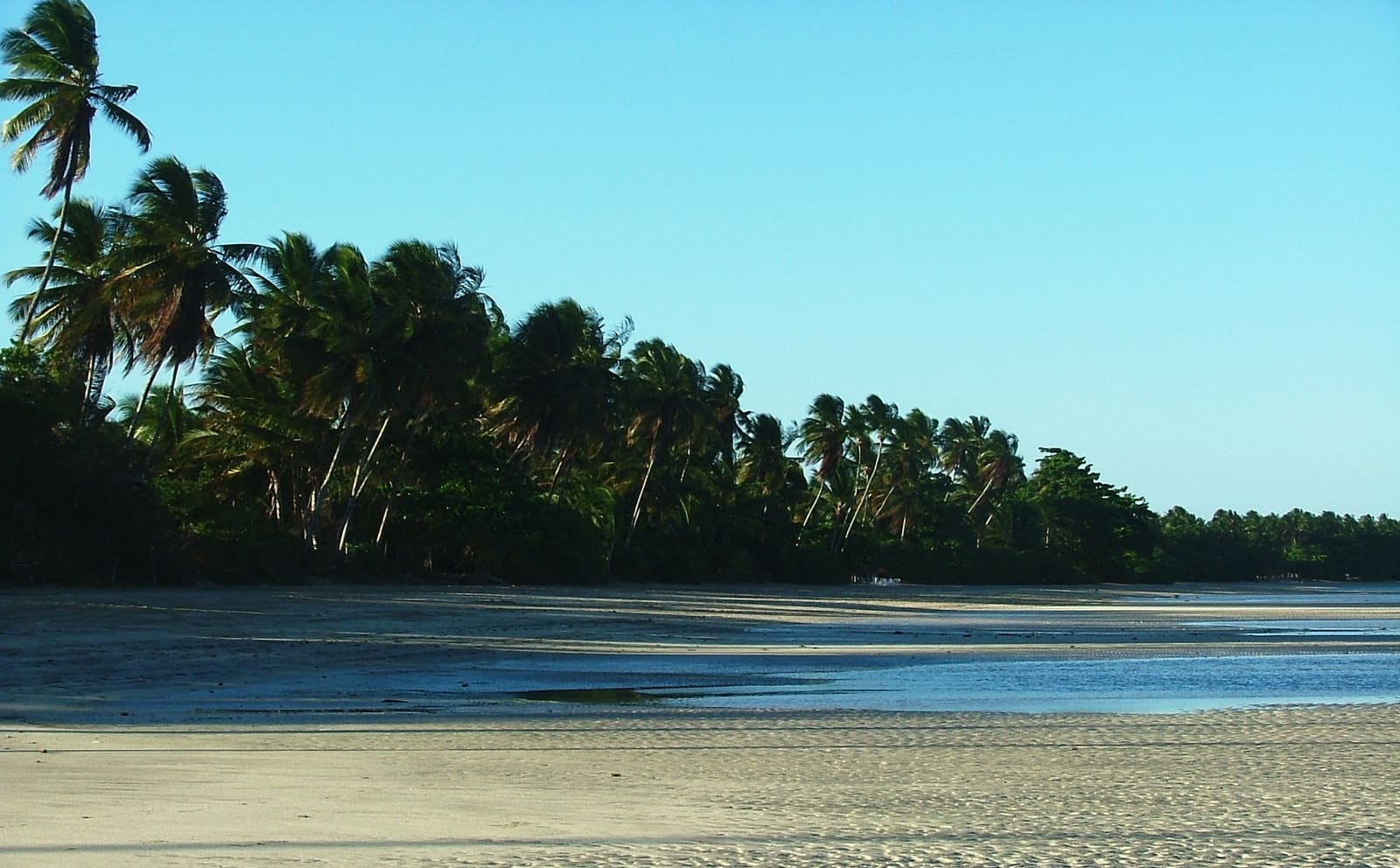
Explore Garapua beach and discover its beautiful natural pools with this fantastic excursion from Morro de Sao Paulo. You'll love the beautiful landscapes!
6 h 15 min
from US$ 32
Morro de São Paulo deserves 3 to 4 days: enough to explore the four beaches, watch the sunset at the Tapirandu Fortress, take a boat trip around the island and enjoy the nights on Second Beach. The best window runs from August to December, with highs of 27 to 31 °C; from April to June it rains much more, up to 302 mm over 18 days in May.
Morro de São Paulo has no cars, no paved streets and no way to get there except by boat, and that is exactly what made it one of the most coveted destinations in Bahia. At the northern tip of Tinharé Island, in the municipality of Cairu, the village centers on a 17th-century lighthouse and on numbered beaches, from First to Fourth, connected by a strip of sand. Luggage is carried in wheelbarrows; at night, Second Beach turns into a party on the sand.
The climate is warm and humid all year, typical of the Bahia coast, with highs between 27 and 31 °C and a warm sea. Rain is concentrated in fall and early winter, from April to July, with no fully dry season; spring and summer, from September to March, are sunnier and make up the high season. As along the whole coast, the sun usually comes back quickly between downpours, and the heat never really lets up.
Life in Morro is a succession of beaches. First Beach is the closest to the village, with the zipline that drops into the sea; Second Beach has the bars, the infrastructure and the nightlife; Third and Fourth are quieter and family-friendly, with natural pools at low tide. Above the village, the Lighthouse and the ruins of the Tapirandu Fortress offer the best sunset. By boat you can do the loop around the island, with stops at Garapuá and neighboring Boipeba. It is a destination for bare feet, parties and sea, not for those seeking urban comforts.
Updated on October 19, 2026
The heart of the buzz, with bars, restaurants and nightlife on the sand.
The closest to the village, lively, with a zipline that drops straight into the sea.
Quieter and family-friendly, the departure point for boats on the trip around the island.
The longest and most peaceful, with natural pools that form at low tide.
A lookout at the top of the island with a panoramic view and a zipline that descends to First Beach.
Ruins of a 17th-century fortress at the entrance to the village, excellent for watching the sunset.
An old colonial drinking-water spring surrounded by forest, on the way to the Fortress.
A boat trip that circles Tinharé Island, passing Garapuá, Boipeba and natural pools.
Brazil is in the Southern Hemisphere, so the seasons are reversed compared with Europe and North America: summer runs from December to March and winter from June to August. In Morro de São Paulo the difference between seasons is small: from December to March the average high is 31 °C and the low is 24 °C, and in July and August, the coolest months, the high is 27 °C and the low is 21 °C. The reference climate is that of the Salvador station, the nearest one, since Morro de São Paulo has none of its own.
There is almost no dry season, but there are clear differences. The months with the least rain are December, with 63 mm over 7 days, January, with 77 mm over 9 days, and October, with 91 mm over 8 days. The wettest are May, with 302 mm over 18 days, April, with 285 mm over 16 days, and June, with 238 mm over 19 days. The sun usually comes back quickly between downpours.
The most favorable window runs from August to December. September to March is the high season, sunnier and with the village full; from April to July it rains more. No month guarantees the weather, but the heat and humidity last all year.
| Month | High | Low | Rain | Rainy days | Rating |
|---|---|---|---|---|---|
| January | 31 °C | 24 °C | 77 mm | 9 | Fair |
| February | 31 °C | 24 °C | 99 mm | 9 | Fair |
| March | 31 °C | 24 °C | 147 mm | 11 | Fair |
| April | 30 °C | 24 °C | 285 mm | 16 | Not recommended |
| May | 28 °C | 23 °C | 302 mm | 18 | Fair |
| June | 27 °C | 22 °C | 238 mm | 19 | Fair |
| July | 27 °C | 21 °C | 194 mm | 18 | Fair |
| August | 27 °C | 21 °C | 130 mm | 16 | Fair |
| September | 28 °C | 22 °C | 99 mm | 11 | Fair |
| October | 29 °C | 23 °C | 91 mm | 8 | Good |
| November | 30 °C | 23 °C | 108 mm | 8 | Good |
| December | 31 °C | 24 °C | 63 mm | 7 | Good |
Monthly averages for 1991-2020 from INMET (Brazil's National Institute of Meteorology). The rating combines rainfall, temperature and humidity.
In summer (December to February), Morro de São Paulo has highs of around 31 °C (88 °F) and lows of 24 °C (75 °F), and it is the wetter season, with about 80 mm of rain spread over about 8 days a month. The days are hot and call for beach time and shade.
In fall (March to May), Morro de São Paulo has highs of around 30 °C (86 °F) and lows of 24 °C (75 °F), and it is the wetter season, with about 245 mm of rain spread over about 15 days a month. The days are hot and call for beach time and shade.
In winter (June to August), Morro de São Paulo has highs of around 27 °C (81 °F) and lows of 21 °C (70 °F), and it is the wetter season, with about 187 mm of rain spread over about 18 days a month. Temperatures are pleasant for sightseeing all day.
In spring (September to November), Morro de São Paulo has highs of around 29 °C (84 °F) and lows of 23 °C (73 °F), and it is the wetter season, with about 99 mm of rain spread over about 9 days a month. The days are hot and call for beach time and shade.
Weather, crowds, prices and what is happening at the destination in each period. Tap a month to open its full page; the colored dot shows how good the time is for a visit.
An alternative celebration away from the trio elétrico circuit (sound trucks), with parties and luaus on the sand of the beaches.
New Year's Eve with parties on Segunda Praia and concerts, one of the busiest spots in Bahia.
Recurring annual events: exact dates change every year, so confirm them before you plan your trip.
The gateway from abroad is Salvador International Airport (SSA), about 30 km from the maritime terminal in Salvador, where the catamaran to Morro de São Paulo departs (about 2 hours 15 minutes). There is also an air taxi from the airport itself, with a flight of about 25 minutes to the island.
Another option is to arrive through Valença, on the mainland, and take a motorboat or a schooner for between 30 and 90 minutes. Since there are no cars on the island, anyone arriving overland leaves the car in a parking lot on the mainland.
The routes and airlines that fly into Salvador from each country change often; the safest approach is to check them when planning your trip.
In a car-free village, the most practical approach is to choose your lodging according to the beach where you want to spend the most time. Second Beach has the bars, the infrastructure and the nightlife; Third and Fourth are calmer and family-friendly, with natural pools at low tide; First sits right next to the village and has the zipline. Everything is done on foot and luggage goes by wheelbarrow, with porters at the landing. It is best to bring a practical suitcase and shoes for the sand.
Rates change with the dates: confirm the price on Booking.com.
There is no road access: the village is on an island and can only be reached by boat. The options leave from Salvador (catamaran, about 2 hours 15 minutes), from Valença (motorboat or schooner, 30 to 90 minutes) or by air, in small planes. Leave the car in a parking lot on the mainland.
September to March is sunnier and is the high season, with the village full and lively; from April to July it rains more. The most favorable window by weather runs from August to December. There is no fully dry season, but the sun usually comes back quickly between downpours and the heat is constant.
Three to four days is enough to see the four beaches, watch the sunset at the Fortress, take the boat trip around the island and enjoy the nights on Second Beach. If you want to extend your trip to quieter Boipeba, you will need one or two more days.
It depends on what you are looking for. Second Beach is the center of the buzz, with bars and infrastructure; Third and Fourth are calmer and family-friendly, with natural pools at low tide; First has the zipline and sits right next to the village.
It works, but with caveats. Third and Fourth Beach are calm and good for children, but the village is busy, the night is lively on Second Beach and hauling luggage by wheelbarrow along sand streets takes some effort. It is a younger destination, popular with couples.
Yes, it is worth it. Although many places accept cards and Pix (Brazil's instant payment system), this is a small village, and the signal and the card machines can be unreliable. Cash helps with porters, beach stands and small services.
The weather and population data in this guide come from official agencies and open databases. Entry requirements and health recommendations change: always check the official source linked.


