
8.8· 16 reviews
Barra de São Miguel & Frances Private Beach Day Trip
Explore the paradise of southern Alagoas waters on this private day trip to Barra de São Miguel and the beaches of Francês and Gunga from Maceió. Let’s go!
9 h
from US$ 19
Maceió deserves 4 to 6 days: enough for the city beaches, the natural pools, a day trip to Francês or Gunga and the city itself, with time left to rest. The best window runs from October to December, with December the driest month (37 mm over 9 days) and highs of 30 to 31 °C; from April to July it rains more, with 323 mm over 24 days in June.
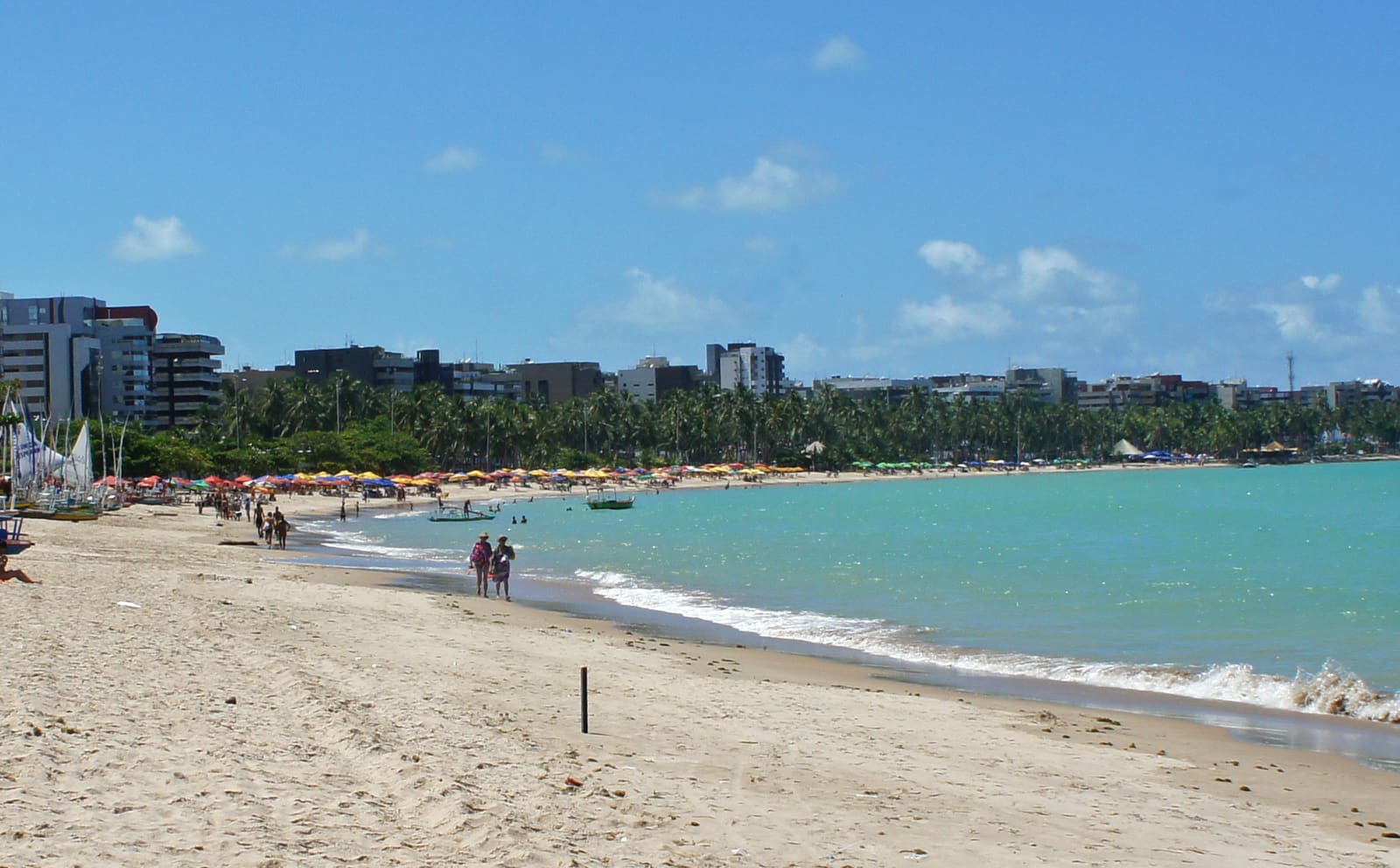
Maceió grew as a sugar port in the 19th century, wedged between the ocean and the Mundaú Lagoon, and became the most sought-after city-beach capital in Brazil's Northeast. The name comes from Tupi; the fame comes from the sea: a strip of warm, greenish water that borders the whole city, from Pajuçara to Cruz das Almas, with coconut palms planted almost in the water. It is a postcard coastline woven into everyday life, with people jogging along the waterfront in the morning and jangadas (traditional sailing rafts) heading out to the natural pools in the afternoon.
The climate is warm all year, with highs that rarely leave the range of 28 to 32 °C and a sea that is always at bathing temperature. The difference between the seasons lies in the rain: fall and winter, from April to July, bring most of the downpours, with May and June the wettest months; spring and early summer, from September to January, are dry and sunny, the best window for the natural pools. Even in the rainy months the sun often comes out between one downpour and the next.
The signature outing in Maceió is the jangada: at low tide it takes you about 2 km off Pajuçara Beach, to natural pools of clear water full of fish. Around them there is a beach for every taste: the open sea at Francês, the cliffs of Ipioca, and Gunga between the ocean and the lagoon to the south. And there is the city: the São Gonçalo lookout, the filé lacework crafts of Pontal da Barra, the seafood bars along the waterfront. It is a destination for relaxing with your feet in the sand, without long distances.
Updated on October 19, 2026
At low tide, jangadas take swimmers to the natural pools that form about 2 km off the waterfront.
In neighboring Marechal Deodoro, it alternates stretches of calm sea with natural pools and an open side popular with surfers.
A beach north of the city, with cliffs, coconut groves and far fewer crowds than the central waterfront.
A high point with a panoramic view over the waterfront, Pajuçara and the Mundaú Lagoon.
A fishing neighborhood on the Mundaú Lagoon, known for its filé lacework crafts and its seafood bars.
The 19th-century Church of Nossa Senhora dos Prazeres (Our Lady of Pleasures), in the city's historic center.
A strip of sand between the ocean and the Roteiro Lagoon, to the south, with colorful cliffs and boat trips.
Stalls along the waterfront selling crafts, hammocks and typical Alagoas food, lively at night.
Brazil is in the Southern Hemisphere, so the seasons are reversed compared with Europe and North America: summer runs from December to March and winter from June to August. In Maceió the heat is constant: summer brings highs of 31 to 32 °C between December and March, and winter is mild; from June to September, the coolest months, the average high is 28 °C and the average low is 20 °C.
What changes is the rain. December is the driest month, with 37 mm over 9 days, followed by November (45 mm over 6 days) and October (70 mm over 10 days). June is the wettest, with 323 mm over 24 days, followed by May (295 mm over 22 days) and July (271 mm over 23 days).
For the natural pools, the best window runs from October to December, and from September to February the weather is drier and sunnier. Even so, the trips depend on low tide rather than on the season: there are pools at any time of year, on days and at times of favorable tide, and in the driest months, with a calm sea, the water looks clearer.
| Month | High | Low | Rain | Rainy days | Rating |
|---|---|---|---|---|---|
| January | 31 °C | 21 °C | 91 mm | 10 | Fair |
| February | 31 °C | 22 °C | 80 mm | 11 | Fair |
| March | 32 °C | 22 °C | 101 mm | 17 | Not recommended |
| April | 31 °C | 22 °C | 194 mm | 19 | Fair |
| May | 30 °C | 21 °C | 295 mm | 22 | Fair |
| June | 28 °C | 20 °C | 323 mm | 24 | Fair |
| July | 28 °C | 20 °C | 271 mm | 23 | Fair |
| August | 28 °C | 20 °C | 192 mm | 19 | Fair |
| September | 28 °C | 20 °C | 109 mm | 15 | Fair |
| October | 30 °C | 20 °C | 70 mm | 10 | Fair |
| November | 31 °C | 22 °C | 45 mm | 6 | Good |
| December | 31 °C | 21 °C | 37 mm | 9 | Good |
Monthly averages for 1991-2020 from INMET (Brazil's National Institute of Meteorology). The rating combines rainfall, temperature and humidity.
In summer (December to February), Maceió has highs of around 31 °C (88 °F) and lows of 21 °C (70 °F), and it is the driest time of year, with about 69 mm of rain a month. The days are hot and call for beach time and shade.
In fall (March to May), Maceió has highs of around 31 °C (88 °F) and lows of 22 °C (72 °F), and it is the wetter season, with about 197 mm of rain spread over about 19 days a month. The days are hot and call for beach time and shade.
In winter (June to August), Maceió has highs of around 28 °C (82 °F) and lows of 20 °C (68 °F), and it is the wetter season, with about 262 mm of rain spread over about 22 days a month. The days are hot and call for beach time and shade.
In spring (September to November), Maceió has highs of around 30 °C (86 °F) and lows of 21 °C (70 °F), and it is the wetter season, with about 75 mm of rain spread over about 10 days a month. The days are hot and call for beach time and shade.
Weather, crowds, prices and what is happening at the destination in each period. Tap a month to open its full page; the colored dot shows how good the time is for a visit.
Street festivities and blocos (street parties) around the city during the Carnival days.
Arraiás (June festival gatherings) with forró, quadrilha square dancing and traditional foods all over the city throughout June.
New Year's Eve with concerts and fireworks on the Pajuçara waterfront and the capital's beaches.
Recurring annual events: exact dates change every year, so confirm them before you plan your trip.
The gateway is Zumbi dos Palmares International Airport (MCZ), in Maceió, about 25 km from the center. From there, taxis and ride-hailing apps reach the waterfront. Routes and airlines change often; the safest approach is to check them when planning your trip.
By road, Maceió is 258 km from Recife (about 4 hours), 290 km from Aracaju (about 4 hours) and 578 km from Salvador (about 8 hours).
Pajuçara, Ponta Verde and Jatiúca make up the city waterfront with the most hotels, restaurants and infrastructure, all linked by the beach. They are easy to get around on foot or by ride-hailing; a car helps for the more distant beaches, such as Francês, Ipioca and Gunga.
Rates change with the dates: confirm the price on Booking.com.
The best window runs from September to February, drier and sunnier, ideal for the natural pools. From April to July it rains more, especially in May and June, although the sun often appears between downpours. The heat is constant all year.
Trips depend on low tide, not on the season: there are pools at any time of year, on days and at times of favorable tide. In the driest months, with a calm sea, the water looks clearer.
Four to six days is enough to combine the city beaches, the natural pools, a day trip to Francês or Gunga and the city, with time to rest. If you want to extend your trip to Maragogi or São Miguel dos Milagres, you will need more days.
For the city waterfront, no: you can walk and use ride-hailing between Pajuçara, Ponta Verde and Jatiúca. A car helps for the more distant beaches, such as Francês, Ipioca and Gunga, or for excursions along the coast.
Maceió is a city-beach capital, with more infrastructure, more going on and natural pools right on its own waterfront. Porto de Galinhas is a more compact, tourist-oriented beach village. Both have natural pools; the choice is between a big city and a village.
Yes, it is one of its strong points: warm, greenish and generally calm on the city beaches protected by reefs, such as Pajuçara and Ponta Verde. On open beaches, such as Francês, there are stretches with waves for surfing.
The weather and population data in this guide come from official agencies and open databases. Entry requirements and health recommendations change: always check the official source linked.


